The World Is Moving Toward the Hydrogen Economy
The global effort to reduce greenhouse gas emissions and achieve Net Zero Carbon goals has encouraged many countries to invest more in clean energy technologies. One of the technologies receiving the most attention is the Hydrogen Economy, which sees hydrogen as an important energy source for transportation, heavy industry, power generation, and energy storage.
Today, hydrogen is used in many forms, including Hydrogen Fuel Cells, Hydrogen Internal Combustion Engines (H₂ICE), synthetic fuels or e-Fuels, and Sustainable Aviation Fuel (SAF). These technologies are expected to play an important role during the energy transition.
However, using hydrogen is not simply a matter of changing the fuel type. It also has a major impact on material design, lubrication systems, and laboratory testing methods.
Hydrogen Does Not Eliminate Wear Problems
Many people believe that because hydrogen contains no carbon, engine wear will automatically decrease. In reality, hydrogen engines face new types of wear that are not commonly found in conventional fuel engines.
For example, hydrogen can enter the structure of metals and cause Hydrogen Embrittlement. This can make materials brittle and increase the risk of cracking and material fatigue in highly stressed components such as crankshafts, rolling elements, bearings, and valves.
At the same time, hydrogen combustion mainly produces water. This creates a risk of water contamination in lubricating oil, which can speed up corrosion and reduce the performance of additives in the lubricant. Therefore, proper lubricant analysis is essential for evaluating oil performance under hydrogen engine conditions.
Hydrogen also requires very little energy to ignite and has a wide flammability range. As a result, Pre-Ignition can occur more easily than with conventional fuels. This may shorten the service life of pistons, valves, and lubrication systems.
Challenges of Hydrogen Engines
| Challenge | Impact | Testing Approach |
| Hydrogen Embrittlement | Materials become brittle and experience fatigue | Test material wear and compatibility |
| Water Formation | Water contamination in lubricating oil | Evaluate lubricant performance |
| Pre-Ignition | Premature engine damage | Develop suitable oil and additive formulations |
| High Temperature | Lubricant oxidation | Test lubricant stability |
| New Wear Mechanism | Changes in wear patterns | Simulate real operating conditions through Tribology Testing |
The table shows that most hydrogen engine challenges are related to materials and lubricants. Special testing instruments are therefore needed to evaluate their performance before they are used in real applications.
Tribology: A Key Part of Hydrogen Engine Development
Tribology is the study of the relationship between Friction, Wear, and Lubrication. It plays an important role in the design and development of modern engines.
For hydrogen engines, Tribology Testing helps researchers answer important questions such as:
- Which materials can best withstand hydrogen environments?
- Which lubricant formulations can effectively reduce wear?
- Which Surface Coatings can extend the service life of engine components?
- Can the lubrication system continue to perform under changing pressure and temperature conditions?
This information helps reduce development costs, lower the number of field tests required, and improve confidence when designing new products.
HPR: Simulating Realistic Hydrogen Operating Conditions
One instrument receiving significant attention from researchers worldwide is the High Pressure Reciprocating Tribometer (HPR) from PCS Instruments.
The HPR is designed to study the behaviour of materials and lubricants under controlled conditions, including load, temperature, speed, and gas atmosphere. It can also conduct tests in hydrogen-containing environments.
The instrument can be used to evaluate:
- Coefficient of Friction (COF)
- Wear Scar Diameter
- Wear Rate
- Lubricant Performance
- Material Compatibility
- Surface Coating Performance
- Effects of Hydrogen Embrittlement
Results from the HPR help researchers select suitable materials and lubricant formulations before moving to prototype testing or real-world applications.
Hydrogen Purity Is Another Important Factor
In addition to materials and lubricants, Hydrogen Purity directly affects Fuel Cell performance and hydrogen production processes.
Impurities at ppm levels may include:
- Oxygen
- Moisture
- Carbon Monoxide
- Carbon Dioxide
- Nitrogen
- Methane
These impurities can reduce fuel cell efficiency, speed up catalyst degradation, and affect the safety of the production process.
Accurate hydrogen gas analysis allows laboratories and industrial plants to measure hydrogen purity and detect trace impurities before the gas is used in production or Fuel Cell applications.
Servomex gas analysis solutions can accurately measure hydrogen purity and different gas impurities. These solutions are suitable for industrial hydrogen production, storage, and application processes.
Fuel Analysis Remains Important During the Energy Transition
Although hydrogen is considered an important energy source for the future, many other fuels will continue to be used during the transition period. These include Sustainable Aviation Fuel, Renewable Diesel or HVO, e-Fuels, Methanol, and Ammonia.
Reliable fuel quality testing for SAF and HVO is necessary to confirm that these fuels meet performance, safety, and international quality requirements.
Important test parameters include:
- Viscosity
This information is essential for quality control, standard compliance, and production process improvement.
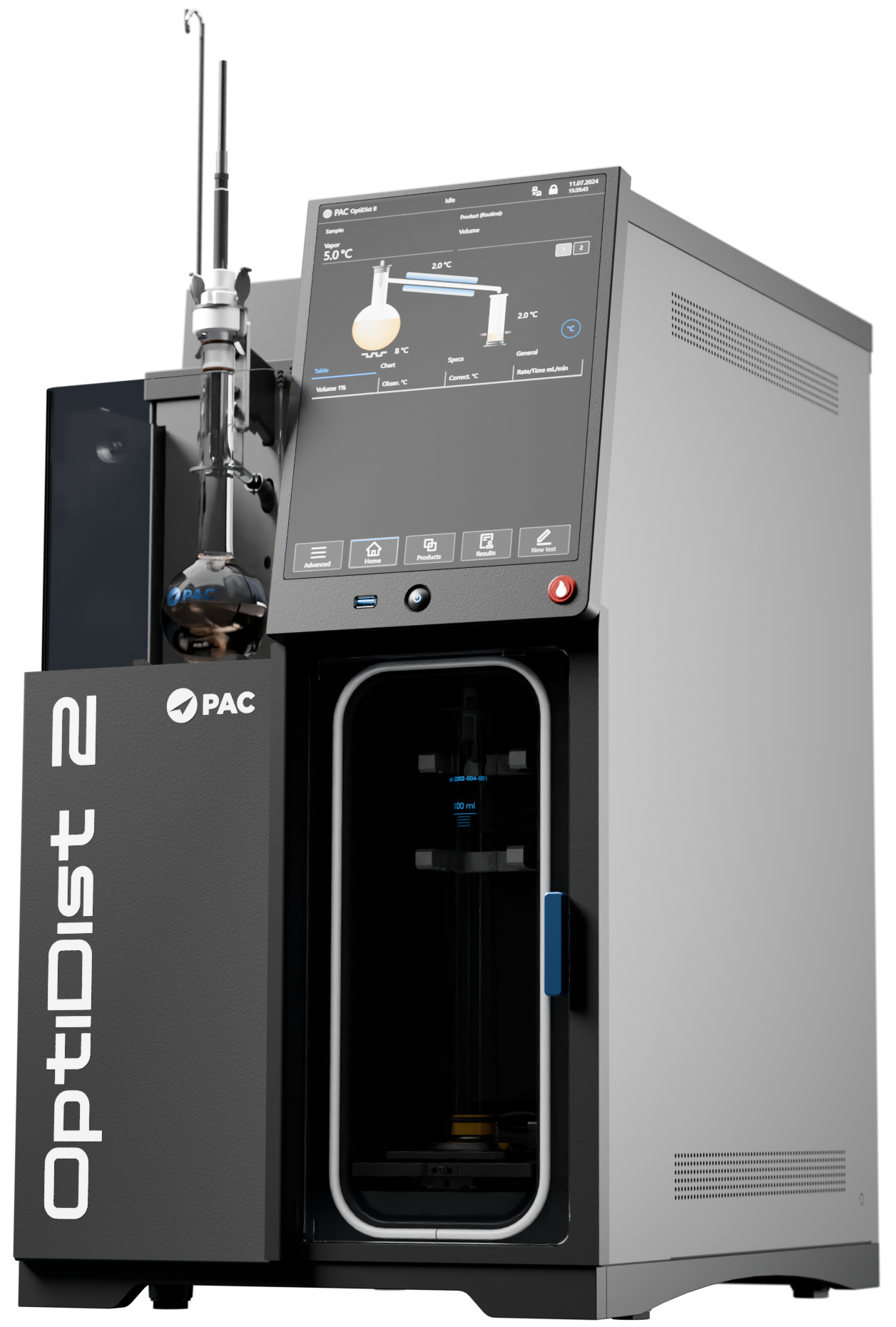
PAC fuel analysis solutions support ASTM, ISO, and IP test methods for both conventional fuels and future fuels, including SAF, HVO, Biodiesel, and other alternative fuels.
Chemical House: Supporting Laboratories for the Future Energy Industry
Chemical House is ready to support research and quality control in the hydrogen industry with solutions covering the entire value chain. These include friction and wear testing, fuel analysis, gas purity measurement, and material analysis.
CH solutions include:
With CH’s experience in analytical instruments and support from its team of specialists, customers can select the most suitable techniques for research, quality control, and product development. These solutions help laboratories and industries prepare for the continued growth of the future energy sector.
References
Society of Tribologists and Lubrication Engineers. (2024, October). Hydrogen-fuelled internal combustion engine technology moves toward commercialization. Tribology & Lubrication Technology. Retrieved from https://www.stle.org/files/TLTArchives/2024/10_October/Feature.aspx
Halder, P., Babaie, M., Salek, F., Haque, N., Savage, R., Stevanovic, S., Bodisco, T. A., & Zare, A. (2024). Advancements in hydrogen production, storage, distribution, and refuelling for a sustainable transport sector: Hydrogen fuel cell vehicles. International Journal of Hydrogen Energy, 52(1), 973–1004. https://doi.org/10.1016/j.ijhydene.2023.07.204
Burke, K. A. (2003). Fuel cells for space science applications (NASA/TM-2003-212730, AIAA–2003–5938). National Aeronautics and Space Administration, Glenn Research Center. Available at https://ntrs.nasa.gov/citations/20040010319
Lubes & Greases. (2024, April 30). The same but different: The unique lubricant challenges of hydrogen engines. https://www.lubesngreases.com/magazine/30_5/the-same-but-different-the-unique-lubricant-challenges-of-hydrogen-engines/


![[2026 Update] Thai Industrial Standards (TIS) for Steel and Metal Products](https://chemihouse.com/wp-content/uploads/2026/10/2026-Update-Thai-Industrial-Standards-TIS-for-Steel-and-Metal-Products.png)