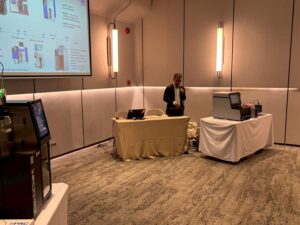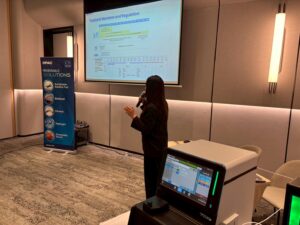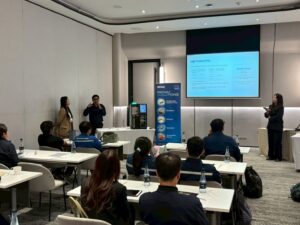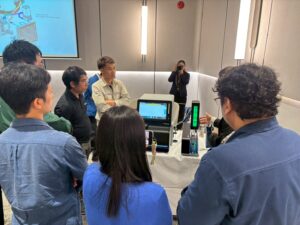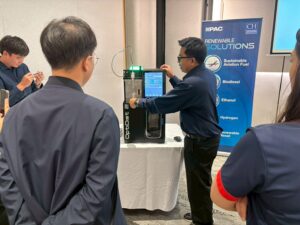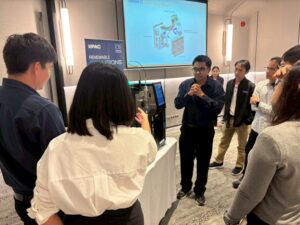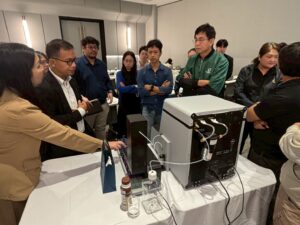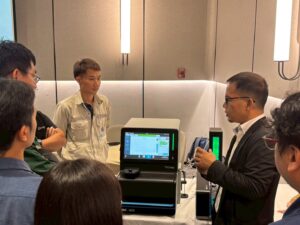
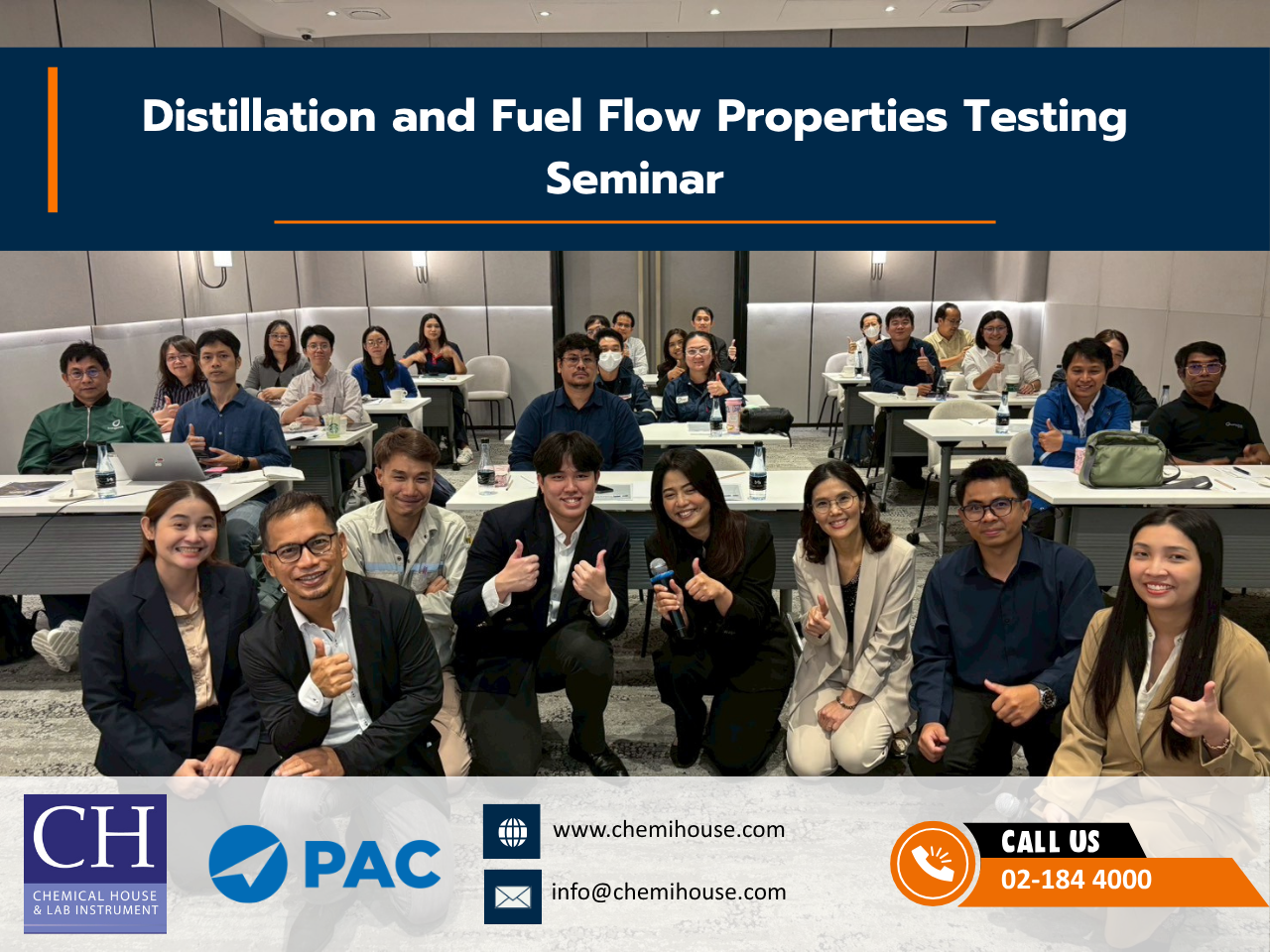
On July 17, 2026, Chemical House & Lab Instrument Co., Ltd. held the Distillation and Fuel Flow Properties Testing Seminar at Mii Hotel Bangkok.
The seminar shared knowledge about fuel distillation testing, fuel flow properties, modern testing technology, and testing methods that follow international standards.
The topics covered diesel fuel, aviation fuel, Sustainable Aviation Fuel or SAF, and Hydrotreated Vegetable Oil or HVO.
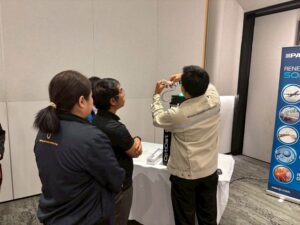
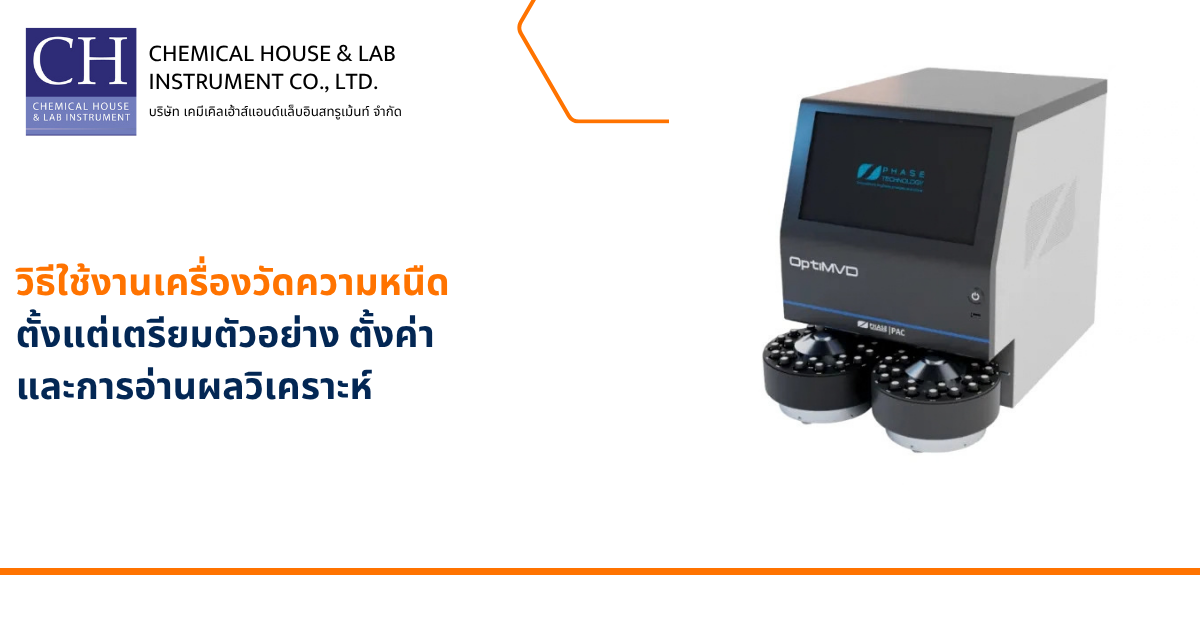
Participants also watched live demonstrations of the OptiDist 2 fuel distillation analyzer and the IFA 70Xe. The demonstrations showed sample preparation, test method setup, test operation, and result review.
Updates on Fuel Testing Technology from Industry Experts
The seminar welcomed two expert speakers who shared their knowledge about sustainable fuel trends, fuel quality control, and modern technologies that can improve laboratory testing.
The Development of Fuel Testing Technology
Mr. Robert Santisteban, Product and Application Manager, presented the development of fuel testing technology.
His session covered fuel distillation analysis and the testing of fuel flow properties at low temperatures.
The main testing topics included:
- Cloud Point testing
- Pour Point testing
- Kinematic Viscosity measurement
- Freezing Point measurement for aviation fuel
- Fuel Density measurement
- Petroleum product distillation testing according to ASTM D86
These tests are important for controlling the quality of diesel fuel, aviation fuel, SAF, and HVO.
Low-temperature flow testing helps laboratories check whether fuel can still flow and work properly under cold conditions.
The session also introduced the OptiDist 2 from PAC and the IFA 70Xe from Phase Technology. Both instruments are designed to improve testing accuracy, reduce testing time, and support automatic laboratory operation.
Requirements and Importance of SAF Testing
Another important topic was the testing of Sustainable Aviation Fuel or SAF.
SAF has some testing requirements and properties that are different from normal aviation fuel.
SAF quality control may include the following tests:
- Fuel stability at high temperatures
- Aromatic content
- Fuel flow properties at low temperatures
- Fuel viscosity at -40°C
- Aviation fuel freezing point
- Fuel density
Viscosity and freezing point testing at low temperatures help fuel producers and laboratories check whether the fuel can still flow properly.
These tests can also help identify the risk of paraffin crystal formation, which may affect the fuel supply system and aircraft engine performance.
Sustainable Fuel Demand in Thailand
Ms. Praphatsorn Wilepana, Technical Sales Manager, presented the growing demand for sustainable fuel in Thailand.
She also explained SAF production technologies that are approved under the ASTM D7566 standard.
One important process is HEFA, or Hydroprocessed Esters and Fatty Acids.
HEFA is a process used to produce SAF from raw materials such as:
- Vegetable oil
- Animal fat
- Used cooking oil
- Waste fats and oils
The HEFA process starts by adding hydrogen to remove oxygen from the raw materials.
The molecules are then changed through Isomerization and Hydrocracking processes.
After that, the material is distilled to produce SAF and HVO with the required properties.
Quality control during every production step is important. It helps ensure that the fuel has stable quality, is safe to use, and meets the required standards.
IFA 70Xe for Fuel Flow Properties Testing
The seminar included the launch and live demonstration of the IFA 70Xe from Phase Technology.
The instrument can test several important fuel properties.
For aviation fuel, the IFA 70Xe can support tests for:
- Freezing Point
- Viscosity at -40°C
- Viscosity at -20°C
- Density
For diesel fuel, the instrument can support tests for:
- Cloud Point
- Pour Point
- Viscosity at 40°C
- Density
One key advantage of the IFA 70Xe is that it does not require solvents for testing or system cleaning.
It also does not require an external cooling system. This makes installation easier and can reduce long-term maintenance costs.
The screen and user interface are designed to be easy to use. Operators can access functions, set test methods, and review results easily.
OptiDist 2 Distillation Technology for ASTM D86
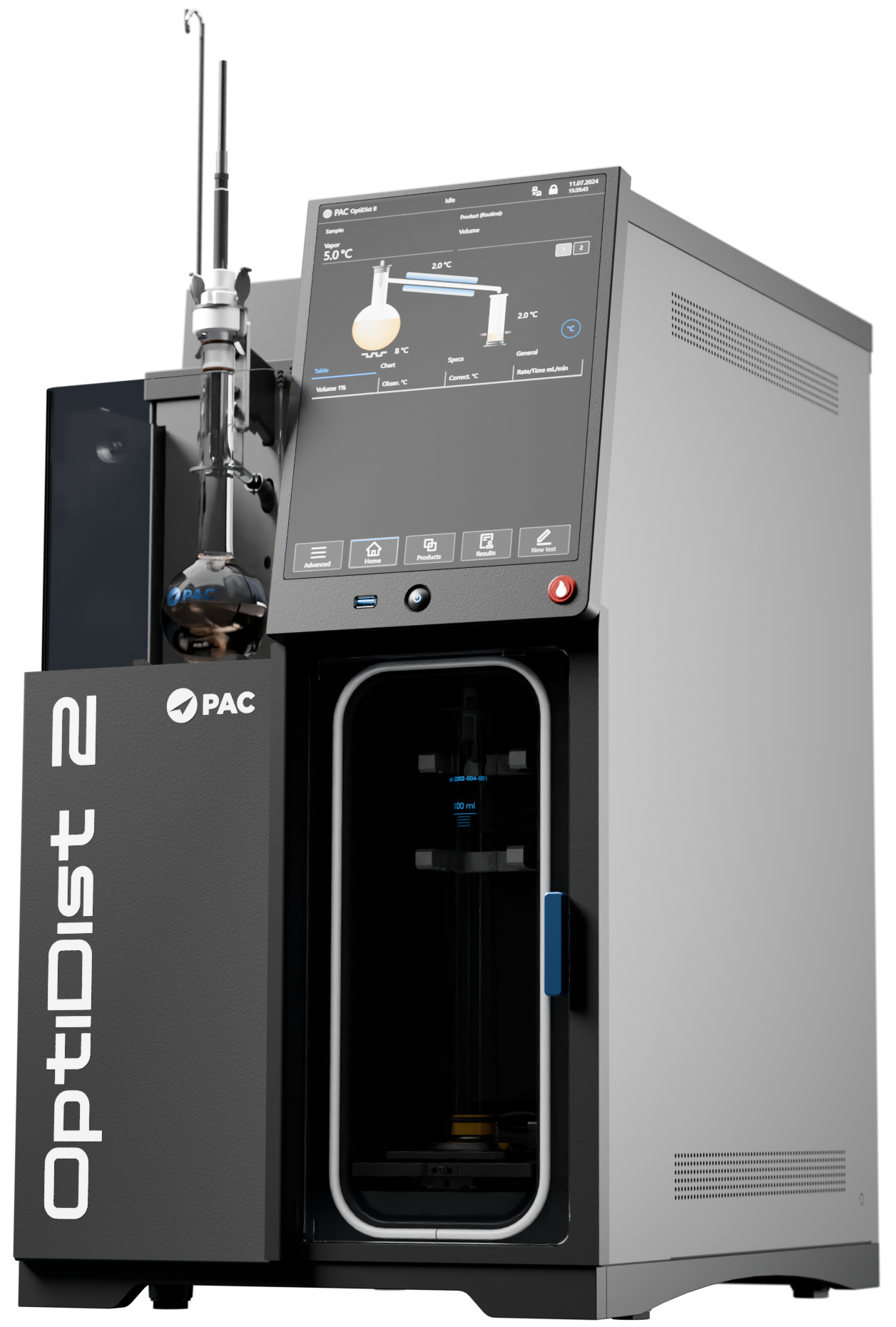
The seminar also presented the OptiDist 2 from PAC for petroleum product distillation testing according to ASTM D86.
The instrument is designed to improve accuracy, safety, and testing efficiency.
Its modular design also helps reduce downtime because important parts can be checked, repaired, and replaced more easily.
The main parts that are easy to access and maintain include:
- Heater
- Condenser Cooling System
- Touch Screen
- Receiver Chamber
The Thermosiphon Cooling System provides stable cooling and helps reduce maintenance work for the cooling system.
The Dual Optimizer technology helps control the distillation rate so that it follows the required test method.
The OptiDist 2 also includes important safety features, such as:
- Fire Detection system
- Automatic fire extinguishing system using CO₂ or N₂
- Quick Cool Down system after testing
- Automatic distillation process control
These features help reduce accident risks, improve operator safety, and support continuous laboratory testing.
Live Instrument Demonstration by the Service Engineer Team
In addition to the technical presentations, the seminar included live demonstrations of the OptiDist 2 and IFA 70Xe by the Service Engineer team.
Participants were able to see each important step closely, including:
- Sample preparation
- Test method setup
- Test startup
- Test result review
The demonstrations helped participants understand the instrument functions and see how the technology can be used to:
- Improve testing accuracy
- Reduce operator work steps
- Reduce testing time
- Improve laboratory safety
- Support modern fuel and sustainable fuel testing
- Reduce long-term maintenance costs
Chemical House & Lab Instrument Co., Ltd. would like to thank all speakers and participants for joining the Distillation and Fuel Flow Properties Testing Seminar and for sharing knowledge during the event.
For more information about fuel testing instruments, SAF testing technology, or laboratory solutions, please contact:
Telephone: 02-184-4000
Email: info@chemihouse.com
LINE Official Account: @chemihouse_th
Facebook: Chemical House & Lab Instrument
More Photos