

Finding the Right Balance of Lubricants and Refrigerants in Compressor Design
Finding the right balance of lubricants and refrigerants in compressor design
Application
Viscosity Analysis of Refrigerant and Lubricant Blends
Viscosity analysis of refrigerant and lubricant blends
Challenges in Finding the Right Refrigerant and Lubricant Balance
When it comes to air conditioning and compressor systems, achieving ideal operating efficiency is about balance. Too much lubricant means the compressor or cooling system won’t cool properly, and too much refrigerant increases bearing wear and reduces the system life. Thicker oil lubricates better, but it also means there is an increase in drag, and more power is needed to rotate the compressor. All of these variables need to be considered when manufacturers design their equipment, and each new design requires significant testing to ensure performance and energy efficiency.
Viscosity Analysis for Optimal Compressor Performance
The right refrigerant/lubricant mixture means optimal performance of the compressor, so knowing the viscosity of the blend is extremely important. Viscosity is a function of pressure, temperature, and solubility. All three are needed for compressor design.
Using Daniel Charts to Analyze Refrigerant and Lubricant Blends
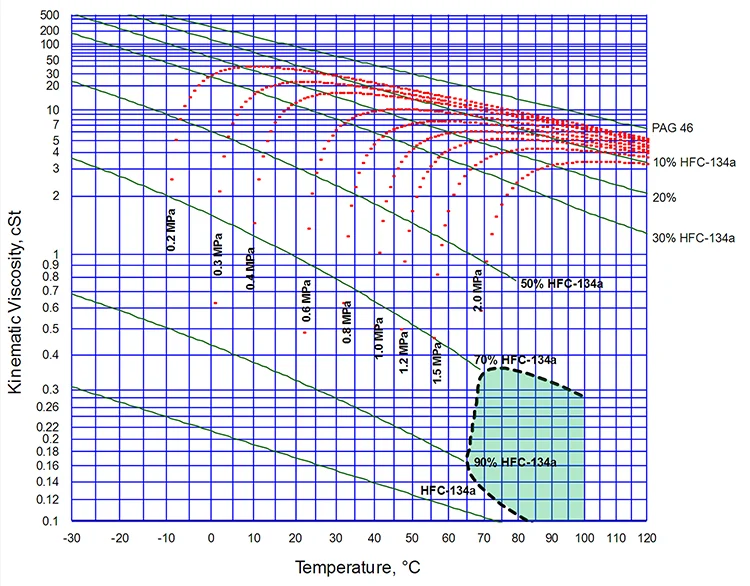
Daniel charts use equations of state to determine the relationship between viscosity, temperature, pressure, and solubility and are used to profile lubrication/refrigerant pairings to ensure optimum performance and efficiency. Cambridge Viscosity’s viscometers are the industry standard for Daniel chart development.
Viscosity Measurement Results and Performance
- Robust measurements under pressures exceeding 2000 psi and temperatures up to 190°C
- Highly repeatable measurement — better than 0.8% of reading
- Low sample volume requirement
- Smallest sensor in the industry
- All 316L stainless-steel, wetted parts
- Accuracy (1%)
571 Viscosity Sensor for Compressor and Used-Oil Analysis
The 571 viscosity sensor is a lube oil viscometer that is ideal for compressor and used-oil analysis.
PAC’s VISCOpro line of micro process viscometer’s includes the only sensors that are small enough to be installed directly in the compressor pump. In addition to being extremely small, the viscometer is flexible enough to work with proven accuracy and reliability under a wide range of pressures and temperatures.
Sensor Installation in the Compressor Pump or Pressurized Line
In a typical installation, the 571 sensor or 501 sensor is mounted directly in the compressor pump or pressurized line, where it captures continuous viscosity and temperature measurements through the test cycle.
The CVI viscometer is unique in its ability to measure low volumes at high temperatures (190 °C) and high pressures (2000 psi+).
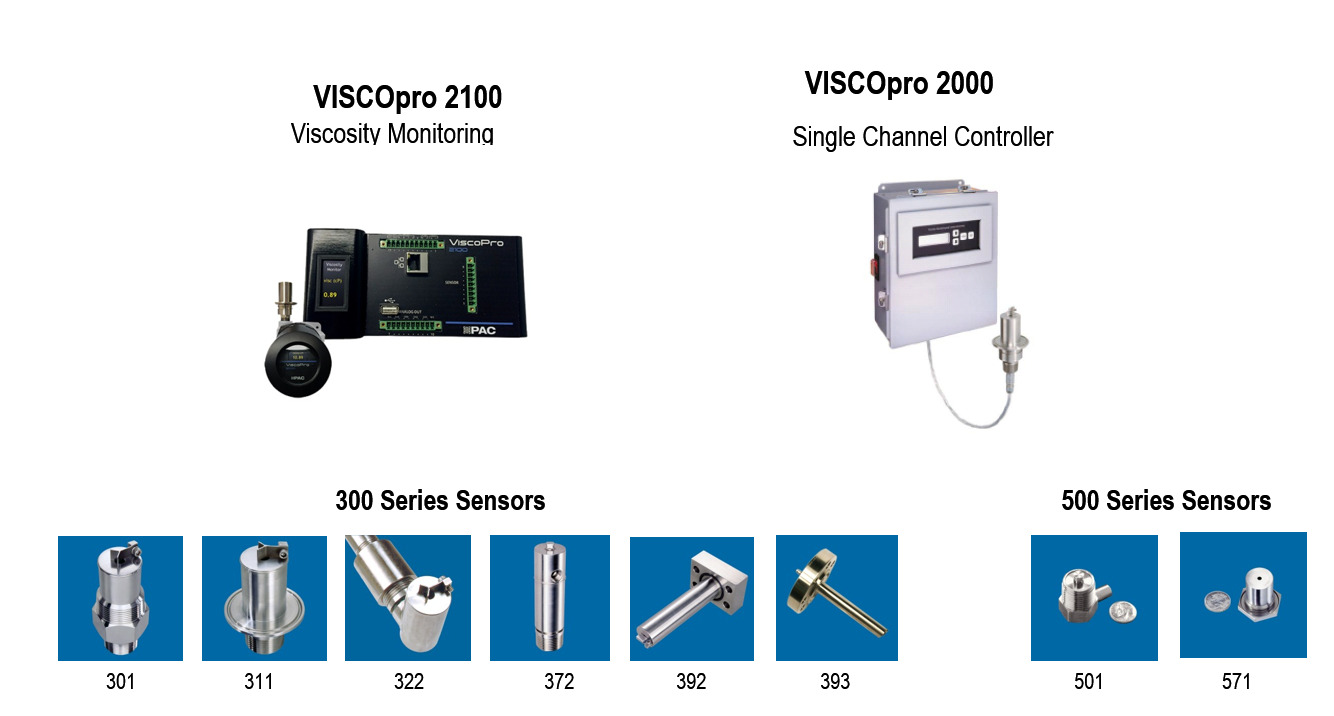
For more information about the VISCOpro 2000 and 2100, visit us online at
https://chemihouse.com/Products/online-viscosity-analyzer/
The Cambridge Viscosity VISCOpro 2000 and ViscoPro 2100 are powerful and easy to use, providing viscosity, temperature, and temperature-compensated viscosity on an enhanced visual display panel.
The VISCOpro 2000 is the only technology that accurately measures all of the most common fuel problems, including fuel dilution, which is difficult for other technologies to detect.
Chemical House Lab & Instrument Co., Ltd
Telephone: +66 2 184 4000 Ext. 214
Email: robert@chemihouse.com


![[2026 Update] Thai Industrial Standards (TIS) for Steel and Metal Products](https://chemihouse.com/wp-content/uploads/2026/10/2026-Update-Thai-Industrial-Standards-TIS-for-Steel-and-Metal-Products.png)


