TIS 321-2560: Corrugating Medium Standard and Testing Requirements Factory Owners Should Know
TIS 321-2560 is the Thai Industrial Standard for corrugating medium. It covers requirements ranging from roll dimensions and general appearance to grammage, moisture content, water absorption, Concora Medium Test (CMT), and Ring Crush Test (RCT). It also specifies sample conditioning and sampling criteria for inspecting each production lot.
What Type of Paper Does TIS 321-2560 Cover?
TIS 321-2560 applies specifically to Corrugating Medium, the paper used to form the fluted middle layer of corrugated board.
Therefore, this standard applies to the paper used for making flutes, not to finished corrugated boxes.
Requirements for Corrugating Medium Under TIS 321-2560
To determine whether corrugating medium complies with TIS 321-2560, several factors must be checked, including roll dimensions, general appearance, and the required physical properties.
All inspection and test results must meet the specified acceptance criteria for each requirement.
Roll Dimensions and Tolerances
The roll width must match the value stated on the label, with an allowable tolerance of +5/0 mm [check mm value]. This means the roll may be up to 5 mm wider than the stated width but must not be narrower.
The roll diameter is not specified as a fixed value. Instead, it must follow the agreement between the manufacturer and the buyer, with an allowable tolerance of no more than ±80 mm.
Both roll width and roll diameter must be measured using an instrument with a resolution of 1 mm.
General Paper Appearance
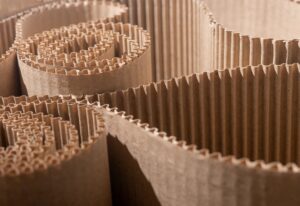
Corrugating medium must be free from defects such as tears, wrinkles, or holes.
If a paper roll contains joints, there must be no more than 2 joints per roll. Adhesive material must be used to ensure that the paper can continue running through the production process, and the position of each joint must be clearly marked on the roll.
5 Properties Required for Testing Under the Standard
TIS 321-2560 specifies five main properties that must be evaluated:
- Grammage or Basis Weight
- Moisture Content
- Water Drop Absorption
- Concora Medium Test (CMT)
- Ring Crush Test (RCT)
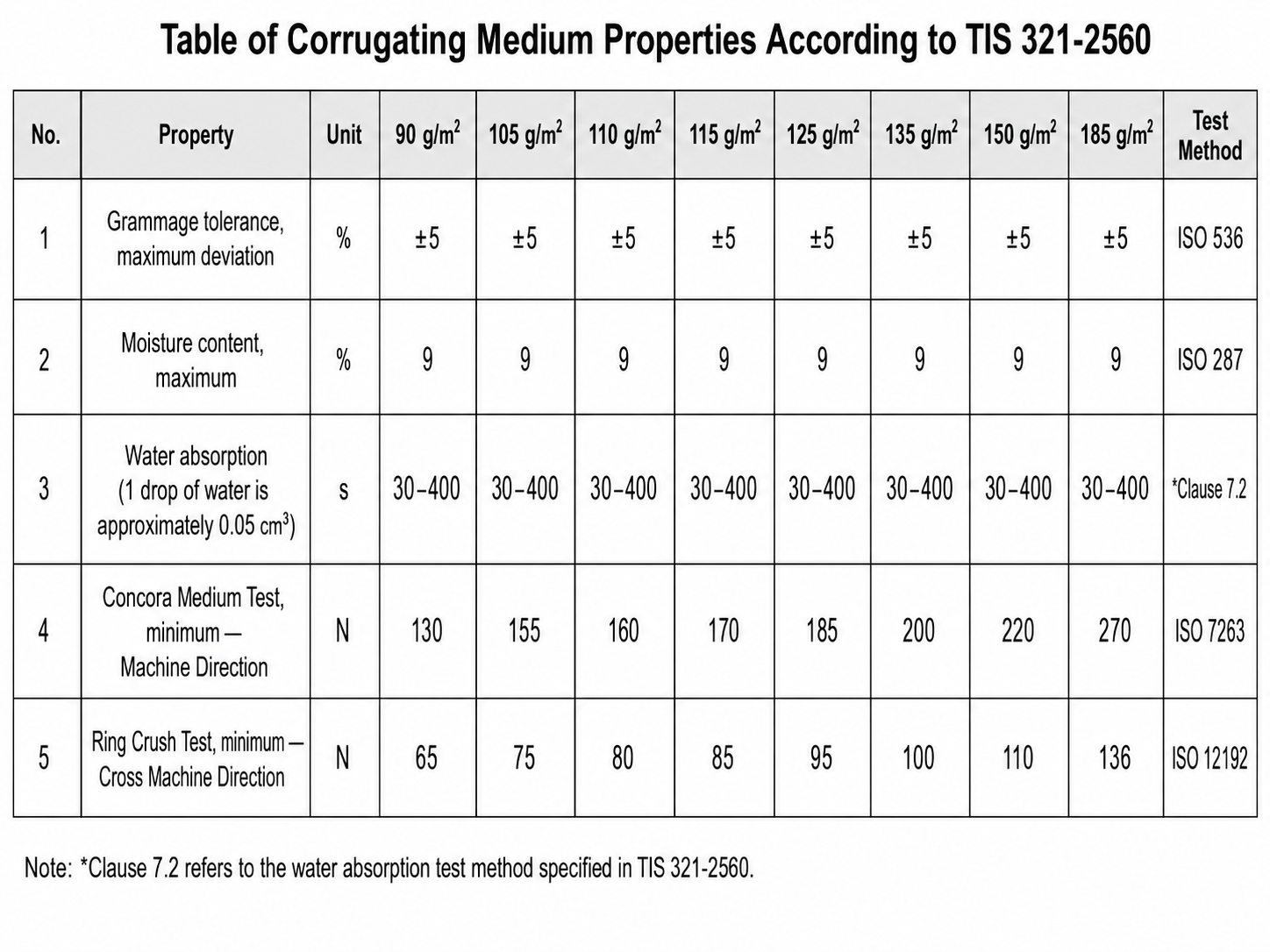
What Tests Are Required for Corrugating Medium Under TIS 321-2560?
Basis Weight (Grammage)
Basis Weight, or Grammage, is the mass of paper per unit area and is expressed in grams per square metre (g/m²).
TIS 321-2560 specifies grammage values ranging from 90 to 185 g/m². The measured value is allowed to deviate from the specified value by no more than ±5%.
Moisture Content
Moisture Content refers to the amount of water contained in the paper compared with its original mass under specified test conditions.
For corrugating medium under TIS 321-2560, the moisture content must not exceed 9%, with ISO 287 used as the reference test method.
In quality control applications, Grammage and Moisture testing are commonly used to evaluate the basic properties of paper.
Learn more about paper grammage and moisture testing.
Water Drop Absorption
Water Drop Absorption under TIS 321-2560 measures the time required for a drop of water to be completely absorbed through the paper surface.
The acceptable absorption time is between 30 and 400 seconds.
For the test, approximately 0.05 cm³ of distilled water is dropped onto the test specimen from the tip of a burette positioned 25 mm above the sample surface.
Timing begins when the water first contacts the paper and continues until the water has been completely absorbed. If the absorption takes more than 2 minutes, the water drop must be covered with a watch glass.
Each specimen must be at least 10 × 10 cm in size, and at least 5 specimens must be selected for testing on each side.
The Wire Side and Felt Side must be clearly identified and tested separately.
Concora Medium Test (CMT)
The Concora Medium Test (CMT) evaluates the ability of corrugating medium to resist compressive force after the paper has been formed into flutes.
The test measures the force required until the fluted structure begins to collapse, making CMT an important value for evaluating the strength of corrugating medium before it is converted into corrugated board.
Ring Crush Test (RCT)
The Ring Crush Test (RCT) measures the ability of paper to resist edgewise compressive force when the test specimen is formed into a ring and compressed until deformation occurs.
Under TIS 321-2560, RCT must be evaluated in the Cross Machine Direction (CD) and tested according to ISO 12192.
The minimum required RCT value increases according to the grammage of the paper.
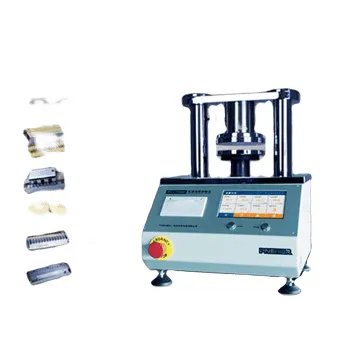
Chemical House & Lab Instrument supplies Crush Tester and Ring Crush Tester instruments designed for laboratory testing and quality control in manufacturing plants.
Sample Preparation for Accurate Test Results
Control Temperature, Humidity, and Conditioning Before Testing
The standard requires test specimens to be conditioned and tested under controlled laboratory conditions at either:
- 27 ± 1°C and 65 ± 2% RH
- 23 ± 1°C and 50 ± 2% RH
The test specimens must remain under the selected conditions for 24 hours before testing.
Sampling and Acceptance Criteria
TIS 321-2560 defines a “lot” as corrugating medium with the same grammage, produced using the same manufacturing process, and manufactured during the same production run.
The required number of rolls must then be randomly selected according to the lot size.
| Lot Size | Number of Rolls Sampled | Maximum Number of Non-Conforming Rolls Accepted |
| Not more than 50 rolls | 2 | 0 |
| 51–500 rolls | 8 | 1 |
| 501–3,200 rolls | 13 | 2 |
| More than 3,200 rolls | 20 | 3 |
Before preparing the test specimens, remove the first 3 layers of paper from each selected roll.
Samples must then be cut from each roll to prepare 20 test sheets measuring 300 × 450 mm, with the long side parallel to the Machine Direction.
If the Machine Direction cannot be identified, specimens measuring 450 × 450 mm must be prepared instead.
The samples must not be damaged during cutting or storage.
For paper manufacturers and laboratories setting up a testing system according to TIS 321-2560, the first step is to identify which properties need to be tested, such as Grammage, Moisture Content, Water Drop Absorption, CMT, or RCT.
The appropriate sample preparation equipment and testing instruments can then be selected to support the relevant standard test methods and the factory’s quality control requirements.
Chemical House & Lab Instrument provides testing instruments for the Paper & Packaging industry and can assist customers in selecting suitable instruments for specific test methods and factory QC applications.
Contact Chemical House & Lab Instrument
Tel: 02-184-4000
LINE OA: @chemihouse_th
Facebook: Chemical House & Lab Instrument
Email: info@chemihouse.com