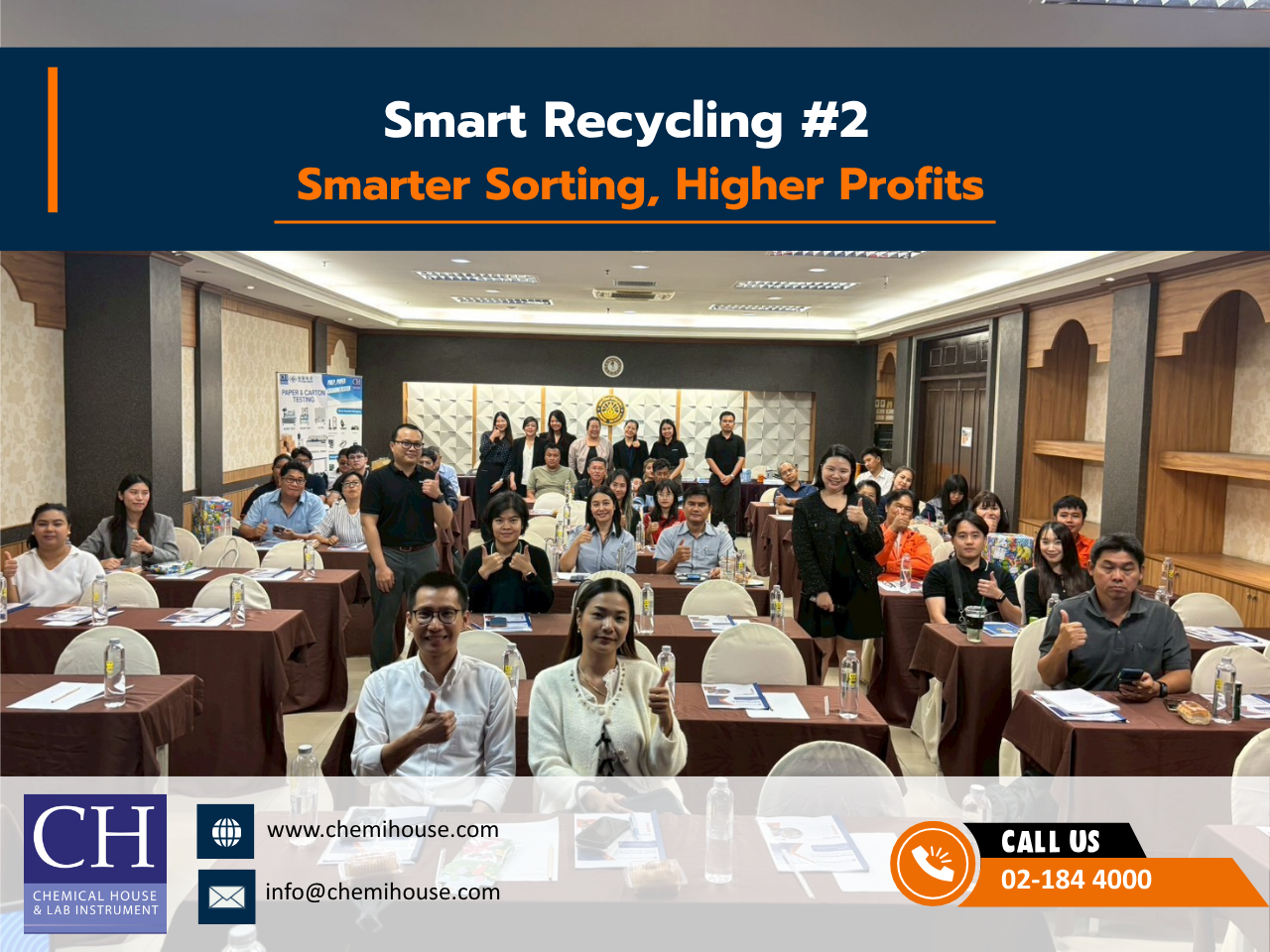
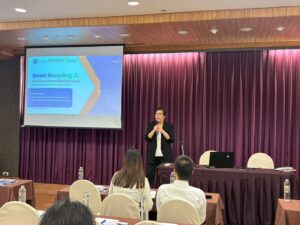
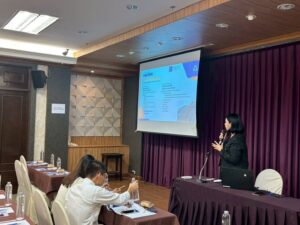
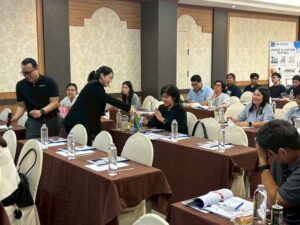
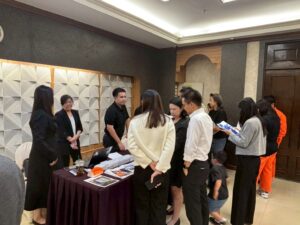
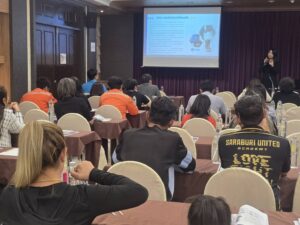
On June 30, 2026, Chemical House & Lab Instrument Co., Ltd. hosted the second Smart Recycling 2: Smarter Sorting, Higher Profits seminar at Tao Thong Hotel, Burapha University.
The seminar was organized to share knowledge, exchange industry experience, and introduce technologies that can help recycling businesses reduce material-sorting errors, improve raw material quality control, and create greater profit opportunities from recyclable materials.
The seminar covered paper and plastic recycling, waste-to-energy technologies, and the inspection and identification of metal grades using fast and accurate analytical instruments.
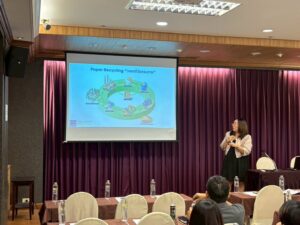
Paper & Plastic Recycling: Increasing Profitability through Recycled Paper Quality Control
The Paper & Plastic Recycling session explained the key factors affecting the buying and selling prices of recycled paper bales, including:
- Paper type and grade
- Cleanliness of the paper bale
- Contamination from plastics, metals, adhesive tape, and other materials
- Moisture content inside the paper bale
These factors are important considerations for recycling plants and buyers when determining purchase prices.
Excessive contamination and moisture can increase the total weight of a paper bale without reflecting the actual amount of usable paper available for the production process.
Measuring Paper Bale Moisture with the Emco AP 500-M6
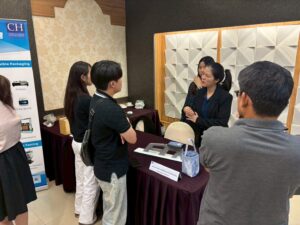
During the seminar, participants were introduced to the Emco AP 500-M6 moisture meter for recycled paper bales.
The instrument enables recycling businesses to measure the actual moisture content of paper bales before purchasing or selling the material.
Using a moisture meter reduces reliance on visual inspection, touch, or operator experience alone. Instead, businesses can use measurable data that can be recorded, verified, and compared.
Accurate moisture data also helps buyers and sellers negotiate prices more transparently, reduces the risk of purchasing paper bales with excessive moisture, and improves cost control throughout recycling operations.
Waste to Fuels: Transforming Waste into Energy
Another key topic presented during the seminar was Waste to Fuels, which focuses on converting waste into usable fuel and energy.
This approach can increase the value of discarded materials, particularly waste that cannot be recycled through conventional processes.
The session introduced two major waste-to-energy conversion technologies: biochemical conversion and thermochemical conversion.
Biochemical Conversion
Biochemical conversion processes can be used to produce biogas, with methane as the primary component.
The biogas produced can be utilized in several ways, including:
- Generating electricity
- Upgrading the gas into biomethane
- Using biomethane as a vehicle fuel
In addition, the remaining material from the fermentation process can be developed into biofertilizer.
This helps reduce waste and supports the efficient use of resources in accordance with circular economy principles.
Thermochemical Conversion
Thermochemical conversion is suitable for processing plastic waste and other materials that cannot be recycled using conventional methods.
The process uses heat and chemical reactions to convert waste materials into synthesis gas, also known as syngas.
The resulting syngas can be further processed into different types of fuel and energy, such as synthetic diesel, or used as a feedstock for producing high-purity hydrogen.
This technology provides an alternative solution for reducing the amount of waste sent to landfills while creating additional value from materials that were previously considered unusable.
Metal Recycling: Accurate Metal Grade Identification for Greater Profitability
The Metal Recycling session highlighted the importance of accurately sorting different metal types and grades.
Each metal type and grade has a different chemical composition, set of properties, and market value.
Incorrect metal grade identification may cause recycling businesses to sell materials below their actual value or purchase metals at prices that are too high, directly affecting business profitability.
Traditional metal-sorting methods may include weighing, visual inspection, operator experience, magnet testing, and spark testing.
However, these methods may not provide sufficient accuracy when identifying metal alloys with similar appearances.
Demonstration of the Hitachi High-Tech X-MET8000 Metal Analyzer
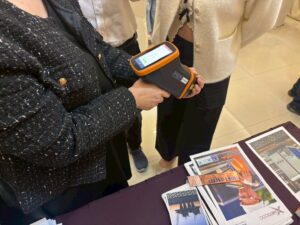
During the seminar, participants attended a demonstration of the Hitachi High-Tech X-MET8000 handheld metal analyzer.
The instrument can rapidly determine the chemical composition of metal samples and identify metal grades with a high level of accuracy.
It can be used to inspect and sort different types of metal materials, including:
- Stainless steel
- Aluminium
- Copper
- Various metal alloys
The analysis can be completed within just a few seconds, allowing recycling businesses to make faster and more informed decisions when purchasing, sorting, and pricing materials.
The technology also reduces reliance on operator experience alone, lowers the risk of incorrect metal grade identification, and helps increase the value of recyclable metals before they are sold or sent into the production process.
Sorting Technologies and the Sustainable Development of Recycling Businesses
Accurate material sorting and quality control are essential factors in the profitability of recycling businesses.
This includes measuring moisture content in recycled paper bales, increasing the value of waste through Waste-to-Fuels technologies, and analysing the chemical composition and grades of recyclable metals.
By using analytical instruments and verifiable data throughout their operations, recycling businesses can reduce errors, control costs, and improve the accuracy of material purchasing and price negotiations.
Chemical House & Lab Instrument Co., Ltd. would like to thank all business operators, speakers, and seminar participants for their interest and valuable contributions to the knowledge and experience shared during the Smart Recycling Seminar #2.
We hope the knowledge and technologies presented during the seminar can be applied to help recycling businesses improve quality control, reduce costs, increase material value, and achieve sustainable profitability.
Enquire about Analytical Instruments for the Recycling Industry
Chemical House & Lab Instrument Co., Ltd. provides consultation on measuring instruments, analytical equipment, and quality-control technologies for the recycling industry.
Tel: 02-184-4000
Email: info@chemihouse.com
LINE Official Account: @chemihouse_th
Website: www.chemihouse.com
![[2026 Update] Thai Industrial Standards (TIS) for Steel and Metal Products](https://chemihouse.com/wp-content/uploads/2026/10/2026-Update-Thai-Industrial-Standards-TIS-for-Steel-and-Metal-Products.png)