Raw Material Sorting Before Melting: IF Furnace Can Also Help Control Steel Quality to Meet Thai Industrial Standards
The Thai Industrial Standards Institute, or TISI, is preparing to collect public opinions on the new draft standard for steel bars. One of the main topics being discussed is the difference between steel production using an IF furnace and an EAF furnace.
Although these two furnace types have different working processes and strong points, the most important point in producing steel bars for construction is that the final steel must have stable quality. It must have controlled chemical composition and test results that meet the standard requirements.
What Is the Difference Between IF Furnace and EAF Furnace?
An IF furnace, or Induction Furnace, is a metal melting system that uses electric induction. Its main strength is fast melting. It is suitable for production that needs flexibility and speed.
However, the quality of steel from an IF furnace depends a lot on raw material selection, chemical composition control, and impurity sorting before the raw materials enter the production process.
An EAF furnace, or Electric Arc Furnace, melts steel by using an electric arc through carbon electrodes. Its main strength is the ability to remove dirt and impurities from the steel. It also helps control the chemical composition of molten steel more accurately. This helps produce steel with more stable quality.
However, whether the steel is produced by an IF furnace or an EAF furnace, the key point is not only the furnace type. The real focus should be quality control throughout the production process and the test results of the finished steel.
Steel Standards Are Not Measured Only by the Furnace Type
Steel used in construction does not need only strength. It also needs toughness, flexibility, proper elongation, and controlled impurity levels. These properties help the structure safely support tension, compression, vibration, and other outside forces.
This is especially important for buildings, bridges, and heavy-load structures. Steel quality is directly related to user safety. If the raw materials contain too many impurities or have unstable chemical composition, the final steel properties may be affected after production.
Therefore, steel standards should not be judged only by the type of furnace. They should also be judged by real test results, quality control systems, and the ability to trace the production process.
Why Is Raw Material Sorting Before Melting Important?
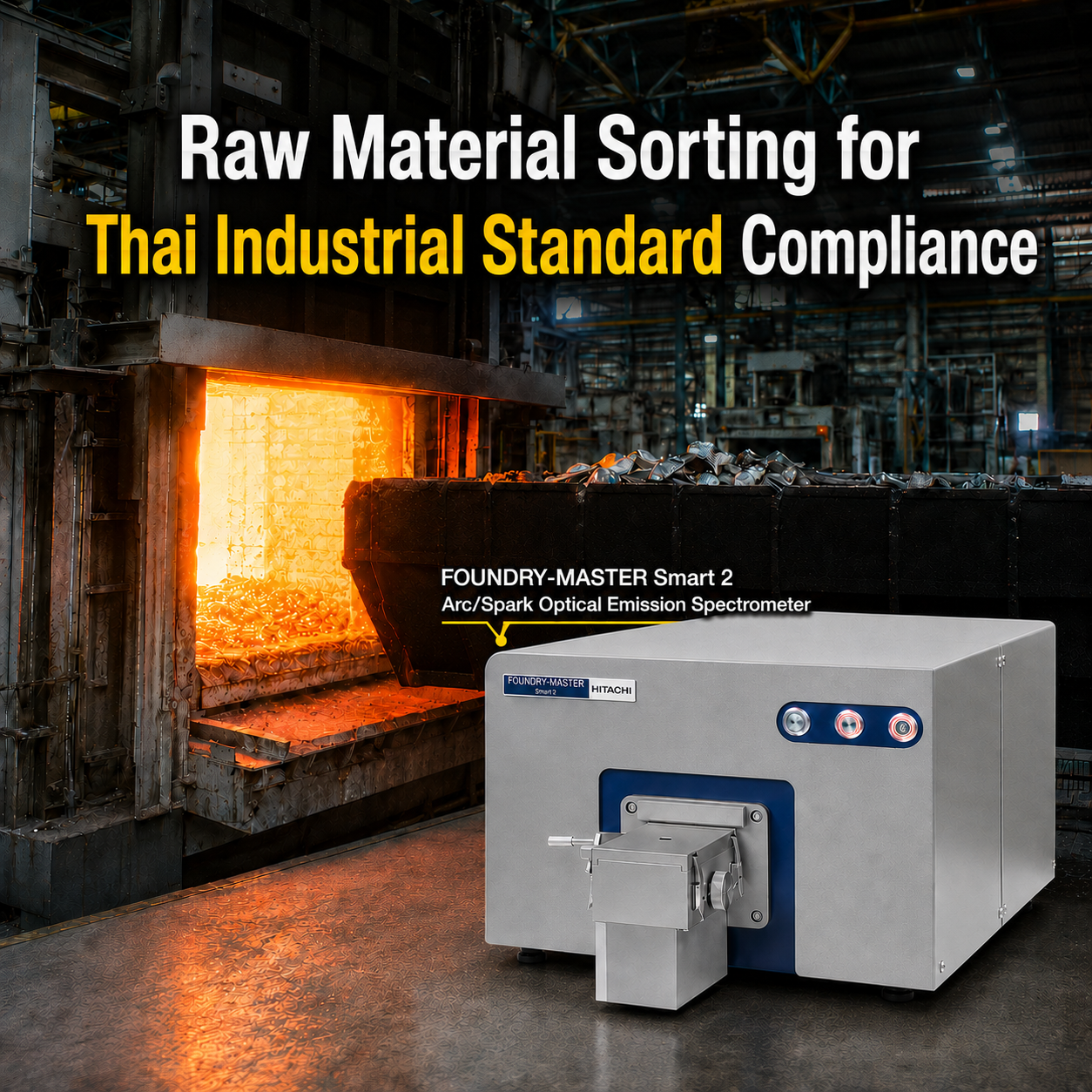
Raw material sorting before melting is an important step that helps reduce the risk of using the wrong material grade or materials with too many impurities. This is especially important in production that uses scrap metal or recycled metal as raw materials.
Checking the metal composition from the beginning helps manufacturers separate raw materials, control chemical composition, and reduce the risk of unwanted elements such as carbon, sulfur, phosphorus, and other elements that may affect the mechanical properties of steel.
When raw materials are sorted properly before melting, the production process can control quality better. It helps reduce errors in chemical composition and increases the chance that the finished steel can pass the required standard tests.
Steel Quality Must Be Checked Throughout the Production Process
Steel quality control should start from checking raw materials before production. It should continue with chemical analysis of molten steel and testing of the finished product. This helps confirm that the steel properties meet the required standard.
Important checks in the steel production process include:
- Chemical composition analysis of metal
- Checking impurity elements such as carbon, sulfur, and phosphorus
- Sorting wrong-grade raw materials before they enter the furnace
- Tensile strength testing
- Elongation testing
- Checking the consistency of the finished product
These test results help manufacturers control quality in a systematic way. They reduce the risk of quality problems and help make sure that the steel is suitable for structural use.
Standard Steel Starts with Raw Material Control
In the end, “standard steel” does not depend only on melting technology. It depends on the whole quality control system, from raw material selection and chemical analysis to production control and finished product testing.
For steel foundries that use an IF furnace, raw material sorting before melting is a step that should not be overlooked. It is the starting point of quality control and helps reduce the risk of impurities.
For more information about instruments for sorting steel grades and metal grades, please contact:
Tel: 02-184-4000
E-mail: info@chemihouse.com
Line OA: @chemihouse_th
Facebook: Chemical House & Lab Instrument
![[2026 Update] Thai Industrial Standards (TIS) for Steel and Metal Products](https://chemihouse.com/wp-content/uploads/2026/10/2026-Update-Thai-Industrial-Standards-TIS-for-Steel-and-Metal-Products.png)