Handheld XRF vs. Spark OES: How to Choose the Right Metal Analyzer
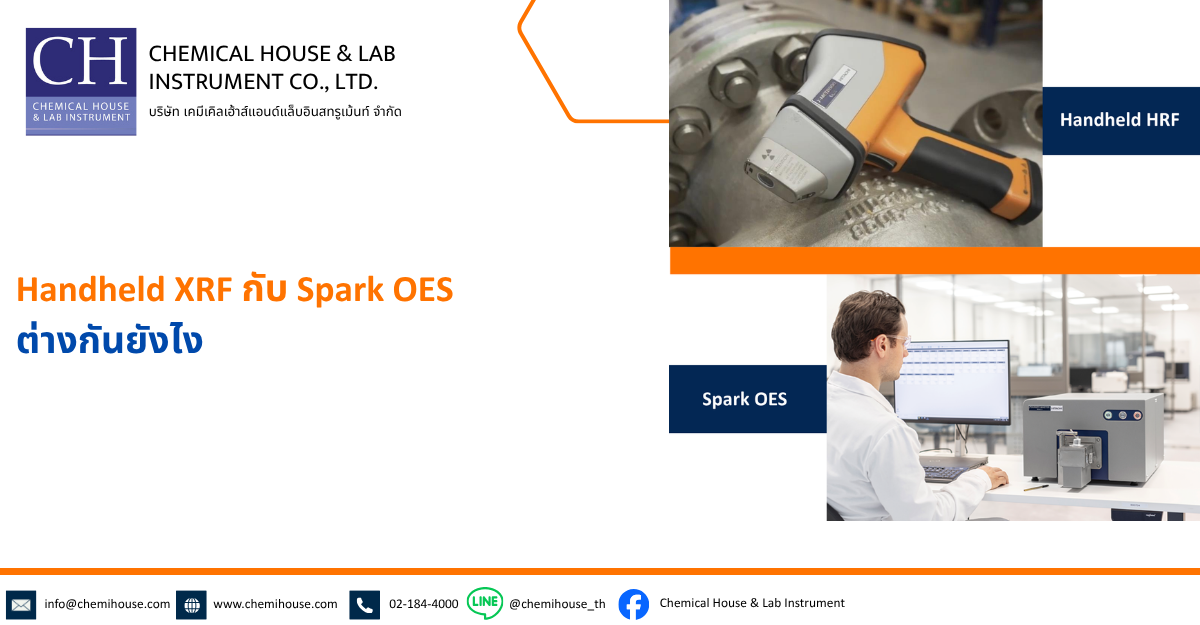
If you need to check pipes, valves, or many pieces of scrap metal, handheld XRF is well suited for on-site grade sorting and positive material identification (PMI). Spark OES is suited for checking whether a metal’s composition meets specifications, such as when you need to report carbon (C) or boron (B) in steel or verify the chemistry before releasing a batch.
Stainless steel is a good example. The molybdenum (Mo) content can help distinguish 304 from 316. To confirm that 316L meets its carbon limit, use a method that measures carbon, such as Spark OES with a stainless steel calibration. See ASTM E1086 for stainless steel analysis by Spark OES
Comparing Handheld XRF and Spark OES
| Feature | Handheld XRF | Spark OES |
| How it works | Uses X-rays to excite the sample and measures the X-rays emitted by its elements. | Uses an electrical spark to excite the metal and measures the light emitted by its elements. |
| Elements measured | Measures elements such as Cr, Ni, Mo, and Cu, depending on the calibration. Handheld XRF cannot measure C or B. | Can measure C, P, S, and B when the calibration covers those elements and the required concentration ranges for the metal being tested. |
| Surface preparation | Choose a test spot that represents the base metal. Paint, rust, or coatings may need to be removed before testing. | Prepare a clean, flat surface according to the test method so the sample sits properly on the spark stand. |
| Marks on the sample | Leaves no spark mark. | Leaves a small spark mark at the test spot. |
| Common applications | Incoming material inspection, PMI before maintenance, and scrap metal sorting. | Quality control in steel plants and foundries, and verification of chemical composition against specifications. |
Use the grade displayed by the analyzer as a starting point for incoming inspection. If the specification sets limits for individual elements, check that each element used to accept or reject the material falls within the calibration’s measurement range. See Hitachi High-Tech’s guide to PMI and metal analysis technologies
Which Hitachi Analyzer Fits Your Work: X-MET8000, OE750, or FOUNDRY-MASTER Smart 2?
Hitachi X-MET8000 for Metal Grade Sorting and On-Site PMI
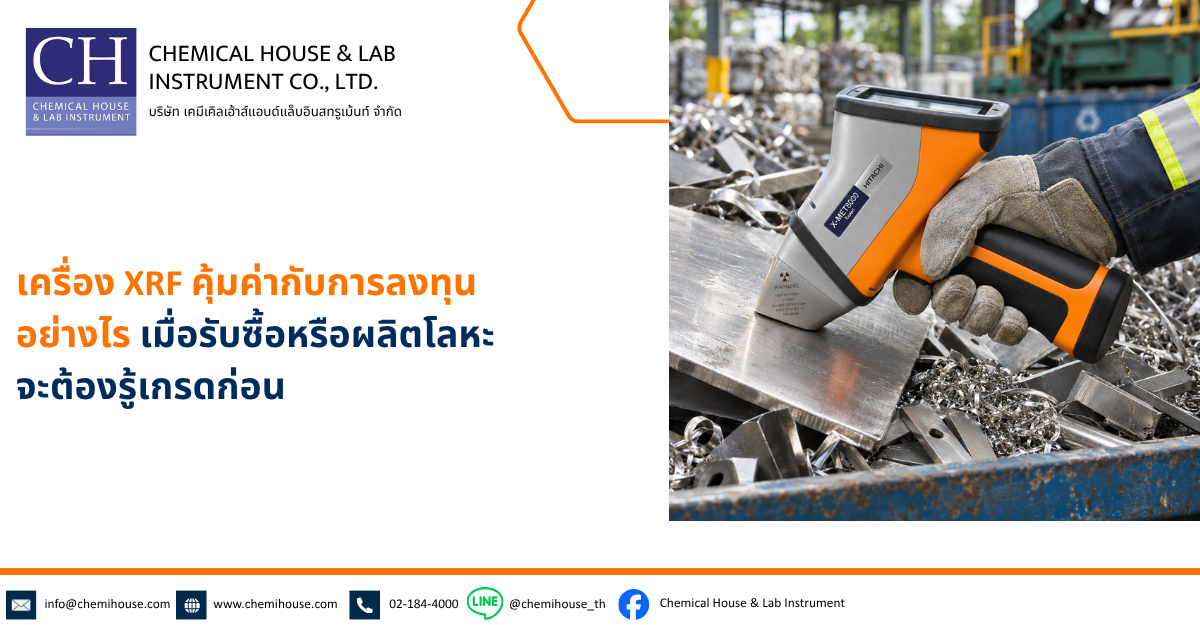
The Hitachi X-MET8000 is a handheld XRF analyzer that teams can take directly to the inspection point. An incoming inspection team can use it to check stainless steel in the warehouse, and a maintenance team can use it to verify installed components. Typical applications include sorting 304 and 316 stainless steel using Mo alongside Cr and Ni, and sorting scrap metal based on the elements covered by the calibration. View the Hitachi X-MET8000 handheld XRF analyzer
If you’re planning to use handheld XRF for maintenance, see how Khanom Power Plant uses the X-MET8000 Expert to support material checks before maintenance. Read the Khanom Power Plant case study
Hitachi OE750 for Carbon and Low-Level Element Analysis in Steel
If your QC lab needs to measure carbon in steel or stainless steel, or verify a low boron limit such as B < 8 ppm, start by checking the Hitachi OE750 calibration range for the type of steel you test. If results are likely to be close to the specification limit, request repeat measurements on actual samples and certified reference materials (CRMs) with values near that limit. This helps you assess whether the analyzer is suitable for batch release decisions. View the Hitachi OE750 Spark OES analyzer · Check the OE750 calibration ranges from Hitachi High-Tech
If you need to assess whether your QC lab is ready for installation, see the steps the service team followed during an actual installation. Read about the delivery and installation of the OE750 metals analyzer
FOUNDRY-MASTER Smart 2 (FMS2) for Foundry QC and Sn-Ag-Cu Alloys
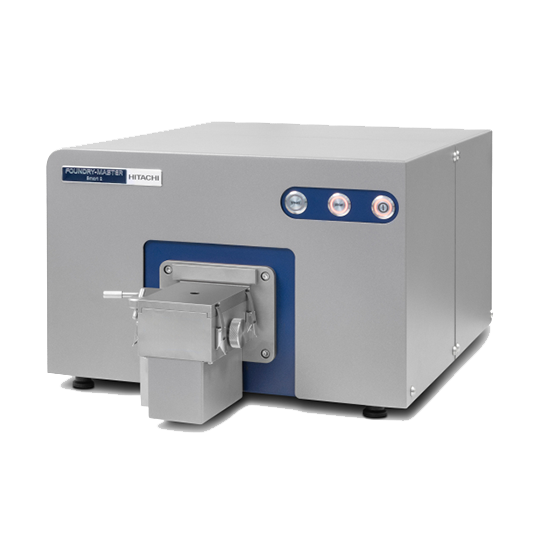
The Hitachi FOUNDRY-MASTER Smart 2 (FMS2) is a benchtop Spark OES analyzer for routine QA/QC. It can be used to check incoming raw materials, verify metal grades, and analyze melt samples. If your facility produces tin-based Sn-Ag-Cu solder alloys such as SAC305, specify the silver (Ag) and copper (Cu) ranges you need to control. This helps you select the right tin-base calibration and assess its performance on your samples before purchasing. View the FOUNDRY-MASTER Smart 2 Spark OES analyzer · Check the FMS2 calibration ranges from Hitachi High-Tech
Frequently Asked Questions About Buying a Metal Analyzer
Can Handheld XRF Confirm 316L Stainless Steel?
Handheld XRF can screen for 316-series stainless steel using elements such as Cr, Ni, and Mo. To confirm that the material meets the low-carbon requirement for 316L, measure carbon using Spark OES or another method accepted by your specification. See ASTM E1086 for stainless steel analysis by Spark OES
Which Is Better for a Foundry, the OE750 or the FMS2?
Start with the metals you analyze and the limits you use to adjust melt chemistry or release a batch. The OE750 is suited for low-level element analysis when you need to evaluate performance near a specification limit. The FMS2 is an option for routine QC when its calibration covers the elements and concentration ranges your foundry needs to control. If you mainly test Sn-Ag-Cu alloys, request a test on your samples using a tin-base calibration. Explore Hitachi High-Tech’s stationary Spark OES analyzers
What Information Do I Need to Request a Quote for Handheld XRF or Spark OES?
Provide the metal type, grades or elements you need to measure, concentration ranges or specification limits, sample shape and size, and the number of samples you test per day. If you have a test standard or an existing material certificate, include it. The Chemical House team will use this information to recommend an analyzer and calibration for your quote and sample testing. Request a quote and arrange sample testing for the X-MET8000, OE750, or FMS2