A Comprehensive Guide to Stainless Steel Grade Identification in Industry
Stainless steel is an indispensable material across modern industrial sectors, ranging from heavy petrochemical processing and aerospace engineering to medical device manufacturing and food production. The material’s widespread adoption stems from its exceptional corrosion resistance, mechanical strength, and thermal stability. However, “stainless steel” is not a single entity; it encompasses a vast family of alloys, each engineered with distinct chemical compositions to fulfill specific operational criteria. Misidentifying a grade—such as confusing Type 304 with Type 316 in a marine environment—can lead to catastrophic mechanical failure, premature corrosion, and severe financial liabilities. Consequently, accurate stainless steel grade identification has become a critical baseline protocol within quality control, material receiving, and asset integrity management systems globally.
Meaning of Stainless Steel Grade Identification
Stainless Steel Grade Identification refers to the scientific and technical process of verifying the specific metallurgical classification and alloy composition of a stainless steel specimen. This process determines where a particular piece of metal fits within standard grading systems established by international regulatory bodies, such as the American Iron and Steel Institute (AISI), the Society of Automotive Engineers (SAE), and European Standards (EN).
The identification process relies on analyzing the precise weight percentages of alloying elements—most notably chromium, nickel, molybdenum, manganese, and carbon. By mapping these elemental ratios, engineers can conclusively classify the material into its correct metallurgical family (austenite, ferrite, martensite, or duplex) and assign its precise alphanumeric grade designation.
Primary Objectives of Verifying Material Grades
In industrial manufacturing, construction, and supply chain logistics, verifying the exact grade of stainless steel serves several critical engineering and commercial objectives:
- Quality Assurance and Regulatory Compliance: Manufacturers must verify that incoming raw materials match the mill test certificates (MTC) provided by suppliers. This ensures compliance with stringent international design codes, such as the ASME Boiler and Pressure Vessel Code or FDA regulations for food-contact surfaces.
- Prevention of Material Mix-ups (PMI): In complex construction sites or warehousing facilities where multiple grades of piping or sheet metal are handled simultaneously, inadvertent mix-ups can occur. Verification acts as a final gatekeeper before welding or machining operations commence.
- Failure Analysis and Asset Lifecycle Management: When an industrial component fails prematurely due to corrosion or stress cracking, identifying the material grade helps forensic engineers determine whether the failure was caused by an incorrect material selection or an off-specification alloy batch.
Non-Destructive Testing (NDT) Identification Methods
Non-Destructive Testing (NDT) represents the gold standard for field verification, allowing operators to identify material grades rapidly without altering, damaging, or compromising the structural integrity of the component.
1. Handheld X-ray Fluorescence (XRF) Spectroscopy
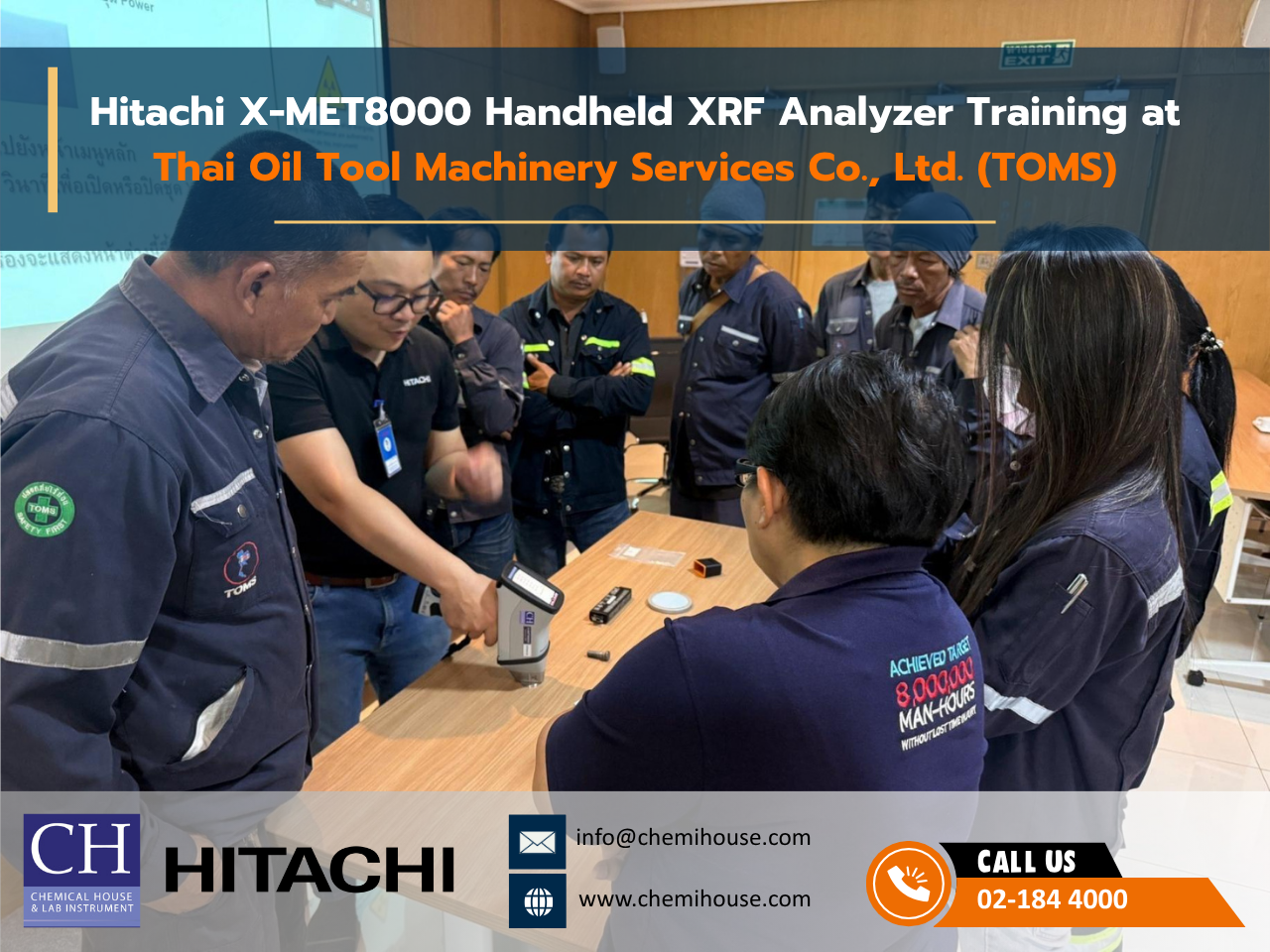
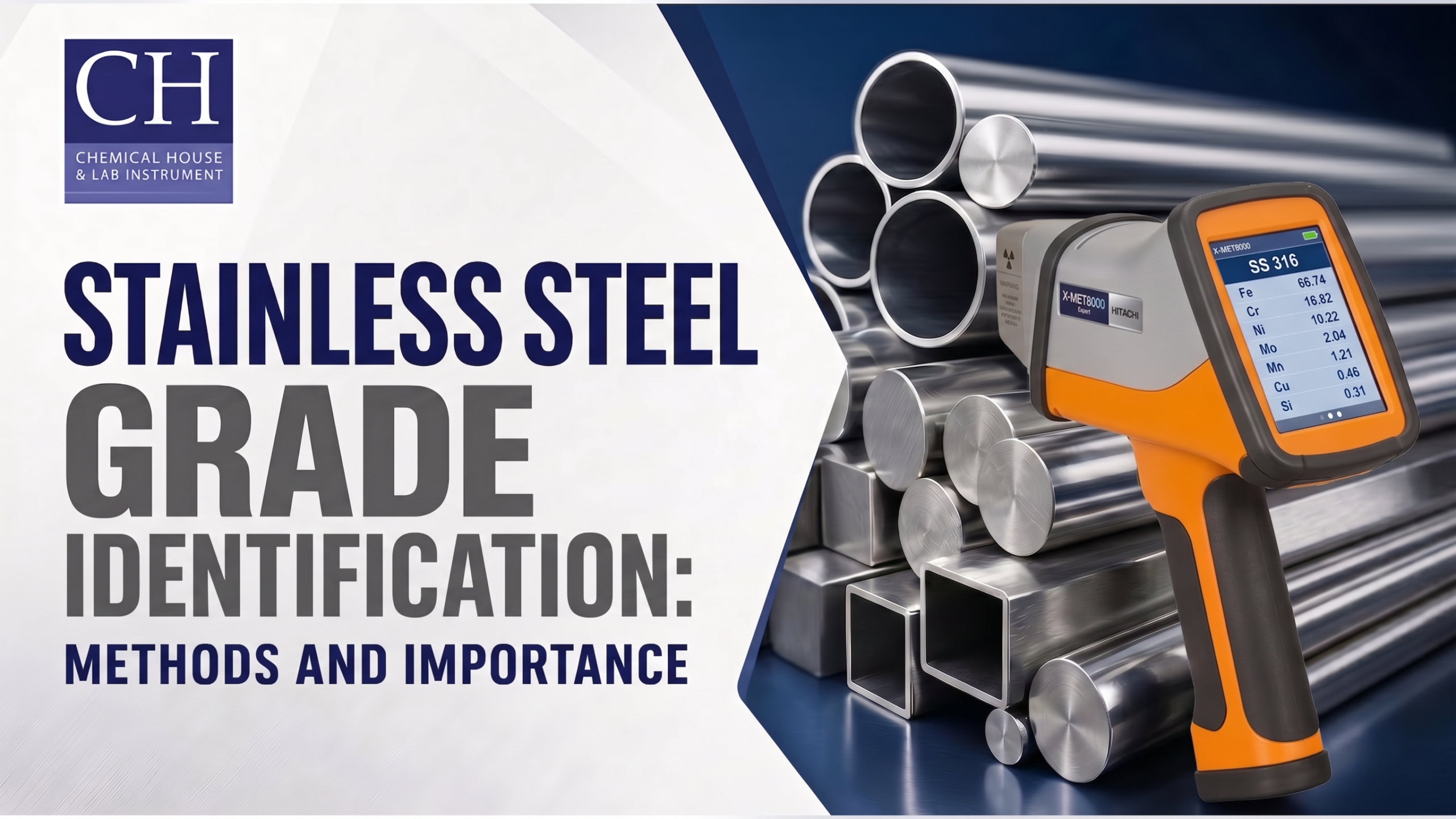
XRF technology is the most widely adopted field method for Positive Material Identification (PMI). The handheld analyzer emits low-energy X-rays into the metal sample, causing the atoms of the alloying elements to fluoresce and emit characteristic secondary X-rays. The device’s detector measures these energy signatures to calculate the exact elemental percentages within seconds, instantly identifying common grades like 304, 316, 430, or 2205 Duplex.
2. Optical Emission Spectroscopy (OES)
While XRF is highly efficient, it cannot accurately quantify ultra-low levels of light elements such as carbon. OES solves this limitation by striking an electric arc or spark against the metal surface to vaporize a minuscule amount of material. The resulting optical spectrum is analyzed to determine the exact carbon content, which is crucial for distinguishing between standard grades and low-carbon variants (e.g., separating 304 from 304L, or 316 from 316L) to ensure weldability and prevent intergranular corrosion.
Destructive and Laboratory-Based Testing Methods
When non-destructive field methods yield ambiguous results, or when definitive legal and forensic validation is required, laboratory-based testing methods are deployed. These methods often require removing a small coupon or sample from the material.
1. Inductively Coupled Plasma Optical Emission Spectroscopy (ICP-OES)
ICP-OES is a wet chemical analysis technique regarded as the ultimate benchmark for metallurgical precision. The stainless steel sample is dissolved in a hot acid mixture (digestion) and injected into a high-temperature argon plasma torch. The extreme heat excites the atoms, causing them to emit light at wavelengths specific to each element. This method provides parts-per-million (ppm) accuracy for every element present in the alloy matrix.
2. Mechanical Testing and Metallographic Analysis
In certain scenarios, chemical composition alone cannot distinguish between two grades that share identical chemistries but have undergone different thermal processing (e.g., annealed vs. cold-worked martensitic grades). Metallographic microscopic examination reveals the grain boundaries, crystal phases, and microstructures, while tensile and hardness testing confirm the mechanical temper and grade specifications.
Quick Screening and Traditional Identification Techniques
For scrap metal sorting, basic recycling, or preliminary workshop screening where expensive spectroscopic instrumentation is unavailable, operators often rely on traditional physical and chemical screening techniques.
| Screening Method | Operating Principle | Primary Application & Limitations |
| Magnetic Response Testing | Uses a permanent magnet to detect the presence of magnetic phases (ferrite/martensite). | Instantly separates Austenitic grades (304/316, which are non-magnetic) from Ferritic and Martensitic grades (400-series, which are magnetic). Note: Cold working can induce slight magnetism in austenitic grades. |
| Acid Spot Testing | Involves applying specific chemical drops (e.g., molybdenum reagent or nitric acid) to the surface. | Rapidly differentiates 304 from 316 stainless steel. The chemical reacts with the molybdenum in Type 316 to create a distinct dark spot, while leaving Type 304 unchanged. |
| Spark Testing | Visual observation of the stream of sparks generated when the metal is pressed against a grinding wheel. | Used by experienced technicians to roughly categorize steel types based on spark color, length, and geometric explosions. Highly subjective and non-quantitative. |
Frequently Asked Questions (FAQs)
1. Why is it impossible to separate 316 from 316L using standard handheld XRF analyzers?
Standard handheld XRF analyzers are highly proficient at measuring heavier transitions and refractory metals like molybdenum, chromium, and nickel. However, the fundamental difference between 316 (maximum 0.08% Carbon) and 316L (maximum 0.03% Carbon) lies solely in their carbon threshold. Because carbon is a very light element, its weak characteristic X-rays are absorbed by the air or the detector’s window before they can be counted. Therefore, an OES analyzer or laboratory combustion test is required to verify the “L” designation.
2. Can a 304 stainless steel component become magnetic over time?
Yes. While fully annealed austenitic stainless steels (like 304 and 316) possess a face-centered cubic crystal structure that is completely non-magnetic, mechanical deformation—such as cold rolling, bending, deep drawing, or severe machining—can trigger a partial phase transformation from austenite to martensite. This mechanical distortion induces a localized magnetic response. The chemical grade remains 304, but its physical magnetic property changes.
3. What are the risks of using an incorrect stainless steel grade in a chemical processing plant?
The risks include localized galvanic corrosion, pitting, stress corrosion cracking (SCC), and catastrophic structural failure. For instance, if Type 304 is mistakenly installed instead of Type 316 in a piping system carrying hot chloride solutions, the lack of molybdenum in Type 304 will cause rapid pitting corrosion and pinhole leaks within a fraction of the intended service life, posing severe environmental and safety hazards.
Conclusion on Implementing Effective Grade Identification Protocols
Implementing a rigorous stainless steel grade identification protocol is a foundational requirement for modern engineering integrity and quality management. Depending on the operational scale, criticality, and budget constraints, organizations can deploy a tiered approach: utilizing magnetic and chemical spot testing for initial screening, utilizing portable handheld XRF instruments for routine Positive Material Identification (PMI) on the shop floor, and relying on OES or ICP-OES laboratory testing for high-stakes carbon verification. By establishing precise verification systems, industrial operators effectively mitigate the financial and safety risks associated with alloy mix-ups, ensuring structural longevity and regulatory compliance.