
Is an XRF Analyzer Worth the Investment?
An XRF analyzer is worth the investment when its results help a business make better decisions about buying, sorting, or using metal. It can help reduce the risk of buying the wrong metal grade, separate higher-value metals for sale by grade, and identify unsuitable raw materials before they enter production. The X-MET8000 range supports elemental analysis and metal grade identification. However, the model and testing method must suit the material being tested.
The Risks of Buying or Using Metal Without Knowing Its Grade
Metals that look similar can have different chemical compositions. Buying or using them as raw materials without confirming their grades can lead to lower selling prices and products that fail to meet quality requirements.
1.Paying the Wrong Price Can Reduce Profit or Cause a Loss
If buyers judge metal by appearance alone, they may pay the price of a higher-value grade but receive a lower-value one. If the final buyer tests the metal and finds that it does not match the stated grade, the selling price may be lower than expected, leaving little or no profit.
For precious metals, the amount of valuable elements is an important part of pricing. For alloy trading, buyers need to consider both the grade and the final buyer’s requirements. Knowing the composition before agreeing on a price helps buyers set a fairer purchase price.
2.Mixed Metal Grades Can Lead to Lower Selling Prices
Even when metal is purchased at a suitable price, mixing different grades can mean losing the chance to sell some of it at a higher price. The final buyer may need to spend more time testing and sorting it, or may be unable to use the whole batch for its intended purpose.
Before combining metals in one pile, check which grades the final buyer accepts and how much mixing with other grades is allowed. Then store the metals separately and label them according to the test results. Identifying higher-value metal only creates value if it stays separated until it is sold.
3.The Wrong Raw Material Grade Can Lead to Products That Fail Quality Requirements
For foundries, raw materials with the wrong composition can cause the molten metal to differ from the production target. The factory then needs to find the cause and assess whether the composition can be adjusted. This may increase material costs, processing time, and energy use. If the composition cannot be brought within the required limits, the finished castings may fail quality checks. Choosing scrap metal that suits the target grade is therefore part of quality control before melting.
Factories that use induction furnaces (IF) can also learn more about sorting raw materials by grade before loading them into the furnace. Incoming material inspection must work alongside composition control during production and testing of finished products. Confirming the raw material grade alone does not prove that the finished product will meet every requirement.
How XRF Helps Reduce Losses From Buying or Using the Wrong Metal Grade
XRF uses X-rays to excite a sample, then analyzes the X-ray signals released by the elements in it. These signals help identify and measure the elements that the analyzer supports. If you are new to this technique, reading about how an XRF spectrometer works and where it is used can help you understand it before choosing an instrument.
Check Element Content and Metal Grade Before Agreeing on a Price
XRF results help metal buyers understand a material’s composition and assess whether it matches the grade offered by the seller. Buyers can then compare the results with the final buyer’s purchase prices and deduct sorting, transport, and other costs before making an offer. The analyzer helps reduce the risk of buying the wrong metal grade when testing takes place before the price is agreed and the results are used to set that price.
Surface condition affects the analysis, especially when a piece has paint or a thick coating. The surface therefore needs to be prepared using a method suitable for the sample. For plated precious metals or items made from several materials, a result from one spot should not be used to determine the composition of the whole item. Agree on a suitable verification method based on the item and the trading conditions before proceeding.
Sort and Check Raw Material Grades Before Production
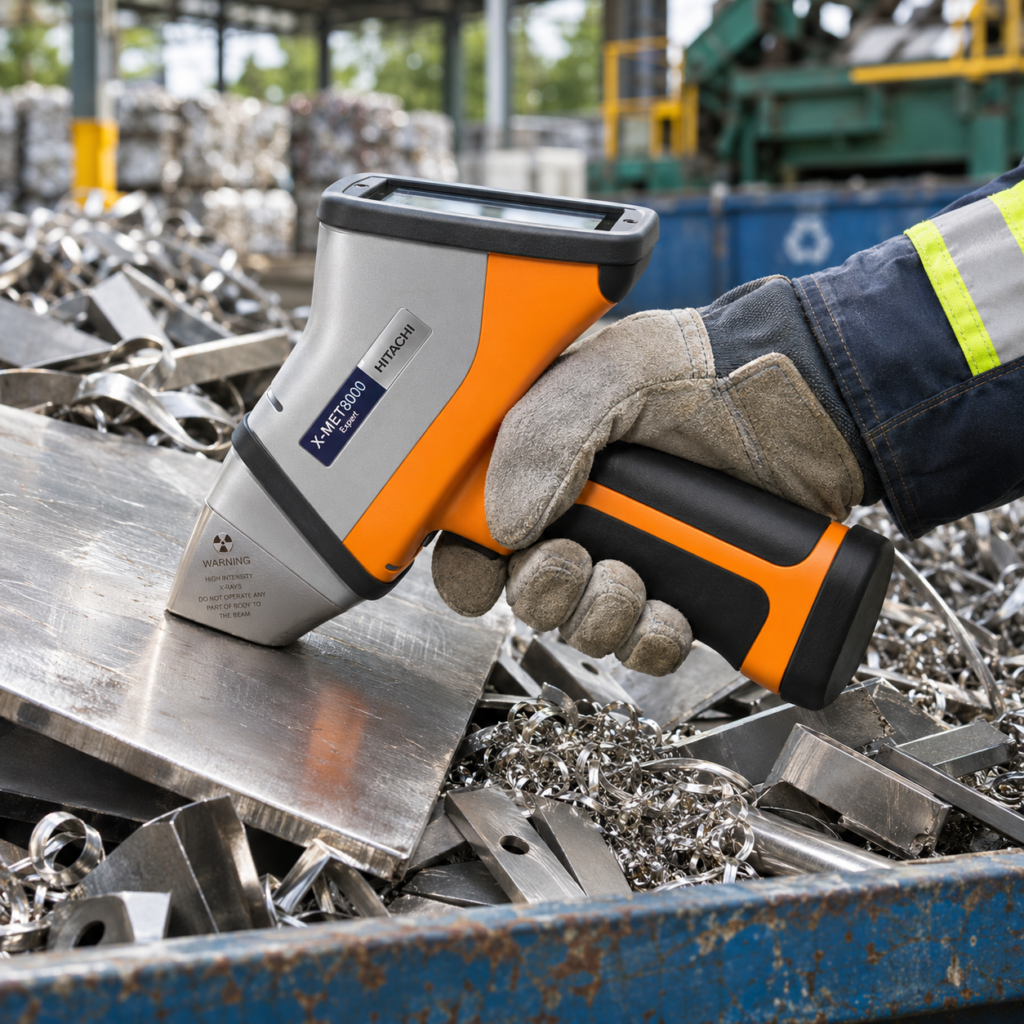
Factories can use handheld XRF to test incoming raw materials and compare the results with the grades or specifications required by production before storing or releasing them for use. This helps identify unsuitable metals at the receiving stage, before they are used. The X-MET8000 range supports incoming alloy inspection and material verification during production, depending on the model and testing requirements.
However, reducing the risk of using the wrong material grade starts with knowing which elements must be measured. If carbon content is needed to distinguish steel grades, handheld XRF cannot fully confirm the grade. Consider using another technique alongside it, such as OES with carbon measurement capability. The factory must also continue to control the composition during melting according to its production requirements.
How to Assess the Value of an XRF Analyzer Before Investing
Base the assessment on your own business data, including the types of metal handled, testing volume, price differences after sorting, and the costs caused by mixed raw materials. Test real samples before making a purchase decision.
Check How Much More You Could Earn by Selling Metal by Grade
Start by listing the metals you buy regularly. Ask your final buyers what prices they would offer for clearly separated grades, including any minimum quantities or other conditions. Compare these prices with your current selling prices to identify which metals could generate more revenue through sorting.
Multiply the price difference by the amount you realistically expect to sort and sell. Then deduct the costs of testing labor, surface preparation, storage, and operating the analyzer. Do not count the entire price difference as extra profit, as higher-value grades may make up only a small share of the metal you purchase.
For precious metal auctions, also assess how much access you have to representative samples before bidding. If you can test only pieces selected by the seller, the results may not provide enough information to value the whole lot.
For Large Material Volumes, Assess the Savings From Reducing Mixed Grades
Businesses that handle large volumes of raw materials should review where wrong-grade metals have been found, such as at receiving, after materials were combined, or before loading into the furnace. Calculate the cost of each incident, including sorting again, returning materials, lost production time, and adjusting the composition. This information helps identify where to use the analyzer and provides a more useful estimate of its value than purchase volume alone.
Before buying, run a trial under conditions close to your normal workflow. Check whether staff can test and separate materials fast enough to keep up with incoming volumes, and set a clear procedure for pieces with unclear results. Testing a few samples does not confirm that every piece in the lot is the same grade. The inspection plan should therefore match the risks of the work. Include training, maintenance, and instrument performance checks in the cost assessment.
To assess whether the Hitachi X-MET8000 handheld XRF analyzer suits your metal buying, sorting, or incoming material inspection needs, contact Chemical House. Prepare details of the metal types, grades you need to separate, elements you need to control, and daily testing volume. This will help the team discuss a suitable model and testing with your actual samples before you invest.