![[2026 Update] Thai Industrial Standards (TIS) for Steel and Metal Products](https://chemihouse.com/wp-content/uploads/2026/10/2026-Update-Thai-Industrial-Standards-TIS-for-Steel-and-Metal-Products.png)
2026 Update: TIS Standards for Steel Manufacturers and a Guide to Steel and Metal Quality Control
Which Thai Industrial Standards (TIS) apply when setting up a steel manufacturing plant? The answer depends on the types of steel or metal products the plant produces. Each standard has its own scope, and mandatory compliance requirements vary.
Manufacturers do not need certification under every TIS standard. They need to identify the standards that apply to their products.
Which TIS Standards Apply to Steel Manufacturers?
The applicable TIS standards depend on the products a plant manufactures. The first step is to identify which standard covers each product. For example, round steel reinforcing bars fall under TIS 20-2559, while deformed steel reinforcing bars fall under TIS 24-2559. Plants producing several product types may need to comply with more than one standard.
Selecting the correct standard also requires a closer look at the product’s manufacturing process, shape, dimensions, coating, and intended use. Steel products that appear similar may fall under different standards, such as hot-rolled structural steel sections and cold-formed structural steel sections.
Once the relevant standard has been identified, check whether it is mandatory or voluntary so that licensing and certification can be planned correctly. The QC team can then use its requirements to develop an inspection checklist covering dimensions, chemical composition, and mechanical properties, with test methods and acceptance criteria appropriate to the product grade.
What Is the Difference Between Mandatory and Voluntary TIS Standards?
Mandatory TIS standards apply to products that are legally required to comply with the specified standard. Manufacturers whose products fall within the scope must obtain the required licence and meet the relevant conditions. Certification under voluntary standards is optional, although compliance may still be required by a customer’s purchasing specifications or contract.
The publication of a standard and the date on which compliance becomes legally mandatory are separate matters. These dates may differ. Before starting production or changing product specifications, manufacturers should check the status directly with the Thai Industrial Standards Institute (TISI) and review the relevant official notifications.
Passing selected tests does not, by itself, mean that a manufacturer is licensed to display the TIS mark.
TIS Standards for Steel by Product Category
TIS 20-2559: Steel Bars for Reinforced Concrete — Round Bars

This standard applies to round steel bars for concrete reinforcement within its specified scope. Quality control covers dimensions, mass, and tolerances, together with material characteristics and mechanical properties such as tensile performance and bendability.
These checks help verify that the bars meet both dimensional and performance requirements, rather than relying on visual appearance alone.
TIS 24-2559: Steel Bars for Reinforced Concrete — Deformed Bars
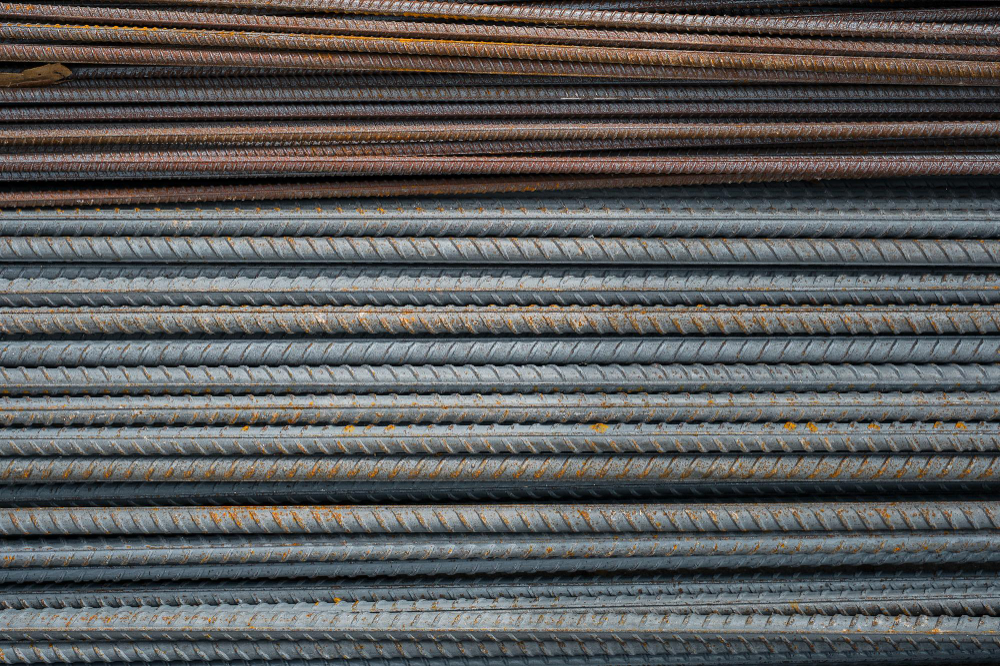
This standard covers deformed steel bars used to reinforce concrete. Inspection includes dimensions, mass, rib and longitudinal fin geometry, chemical composition, and mechanical properties for the specified grade.
These requirements help control the characteristics that allow the steel to work effectively with concrete. The criteria for round reinforcing bars therefore cannot simply be applied to deformed bars in their entirety.
TIS 1227-2558: Hot-Rolled Structural Steel Sections
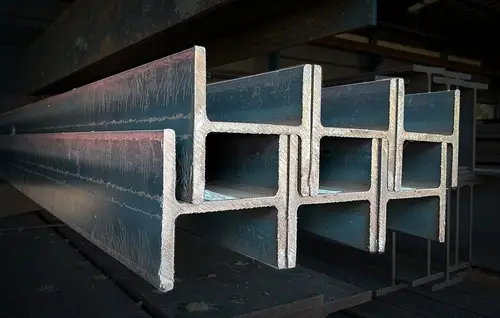
This standard covers hot-rolled steel sections in the forms specified, such as H-sections, I-sections, angles, and channels.
Key inspection points include shape, dimensions, thickness, tolerances, chemical composition, and mechanical properties for the relevant grade.
TIS 1228-2561: Cold-Formed Structural Steel Sections for General Structural Applications
This standard applies to sections formed from hot-rolled steel sheet by cold forming, such as C-sections. It covers products without metallic coatings, including both painted and unpainted products.
Inspection focuses on cross-sectional dimensions, thickness, chemical composition, and mechanical properties. These products should be distinguished from metallic-coated products covered by separate standards.
TIS 1479-2566: Hot-Rolled Flat Steel Products for General Structural Applications
This standard applies to hot-rolled flat steel products for structural applications within its specified scope. It includes requirements for chemical composition and mechanical properties by grade, as well as dimensions and general characteristics.
QC teams must select the appropriate acceptance criteria for the steel grade and thickness. Mechanical property requirements are not identical for every product size.
TIS 107-2566: Carbon Steel Tubes for General Structural Applications
This standard covers circular, square, and rectangular steel tubes for engineering, architectural, and general structural applications within its stated scope.
Quality control must consider dimensions, wall thickness, chemical composition, and the characteristics required for each tube type. Compliance with this standard should not automatically be taken as confirmation that a tube is suitable for pressure service or other applications.
TIS 2228-2565: Hot-Dip 55% Aluminium-Zinc Alloy-Coated Flat Steel Products
This standard applies to coated steel sheet with the composition and characteristics defined in its scope.
Inspection extends beyond the base steel to include the aluminium content of the coating, coating mass, coating adhesion, and mechanical properties as required for the product. Test requirements for the base steel and the coating should therefore be clearly separated.
Before updating QC plans or applying for a licence, manufacturers should review the applicable standard, any amendments, and relevant transition notifications issued by TISI. This is particularly important when purchasing documents or existing plant manuals still refer to an earlier edition.
Source for mandatory TIS standards: TISI
What Does Steel Testing to TIS Standards Involve Beyond Chemical Composition?
Elemental analysis identifies the composition of a metal, but it cannot fully verify its strength, dimensions, or coating quality. Steel testing to TIS standards must therefore cover all applicable requirements for the product.
Additional inspection areas include:
- Dimensions and mass: Thickness, diameter, cross-sectional dimensions, length, and mass per unit length, as specified in the standard.
- Mechanical properties: Tensile strength, elongation, and bendability, using test methods and acceptance criteria appropriate to the product and grade.
- General appearance and coatings: Defects that may affect performance, together with additional coating requirements for coated steel products.
Chemical Composition Must Be Assessed Against the Requirements for Each Steel Type
Chemical composition testing measures the amount of each element in the steel. The results are then compared with the limits specified for that product type and grade.
These elements may include carbon (C), manganese (Mn), phosphorus (P), boron (B), and sulfur (S). Different standards may specify different elements and acceptable limits, so a single set of criteria should not be used to assess every steel product.
The sampling stage also matters. A sample taken from molten steel during production may be assessed differently from a sample cut from a finished product, depending on the standard.
QC teams should clearly identify the product type, steel grade, and sample source before selecting the acceptance criteria. This helps ensure that results are evaluated correctly.
Choosing Between the OE750 and X-MET8000 for Quality Control
Instrument selection should begin with the elements to be measured, their concentration ranges, the acceptance limits, and the inspection point in the production process.
Laboratory composition control, particularly when carbon measurement is required, has different demands from on-site metal sorting. The OE750 and X-MET8000 serve different roles, and their suitability for the required test method should be assessed before using their results to determine compliance.
OE750 for Laboratory Chemical Analysis and Composition Control

The OE750 uses Spark Optical Emission Spectrometry, or Spark OES. An electrical spark excites a small area of the metal surface, and the instrument measures the light emitted by the elements to determine their concentrations.
It is suitable for analysing solid metal samples in the laboratory, including samples collected from molten metal and allowed to solidify. The results can support composition adjustments and quality control.
The instrument can analyse carbon and other elements in steel, depending on the metal type, calibration programs, and analytical ranges installed.
Before testing, the sample surface should be clean and flat. Rust, oil, and other contaminants should be removed because they may affect the accuracy of the analysis.
X-MET8000 for Incoming Material Inspection and On-Site Metal Grade Sorting

The X-MET8000 handheld metal analyser uses X-ray Fluorescence, or XRF, to determine elemental composition. It is suitable for incoming material inspection, scrap metal sorting, and Positive Material Identification (PMI).
For example, measuring chromium, nickel, and molybdenum in stainless steel can help identify grades and reduce the risk of incorrectly sorted materials entering production. The measurement area should be cleaned to minimise interference from surface contamination.
A key limitation is that handheld XRF cannot measure carbon. The X-MET8000 alone therefore cannot distinguish grades that differ in carbon content, such as stainless steel 304 and 304L.
Additional testing requires an instrument capable of measuring carbon, such as an OES analyser with calibration programs and analytical ranges suitable for the grades being assessed.
If your plant is developing a steel quality control system, Chemical House & Lab Instrument can help assess whether the OE750 or X-MET8000 suits your inspection points and laboratory requirements. Share the applicable TIS standard number, product grade, required elements, and sample types to support the assessment.
Starting with the requirements you need to control makes it easier to select suitable instruments and plan the testing process.