
- AC
- ACA
- AMC
- Applied Test System
- Aro Scientific
- ASI Standard
- Cerulean
- Conidia
- Emcee
- Emco
- PAC
- PCS
- Phase Technology by PAC
- Pnshar
- PolyScience
- PulMac
- Regmed
- RISE
- Scavini
- Spectro Scientific
- Sundy
- Thwing Albert
- Tobias
- USON
- Vived Management JB
- Zematra
- Products
- ICP-OES Elemental Analyzer for Metal Analysis
- Products
- ICP-OES Elemental Analyzer for Metal Analysis
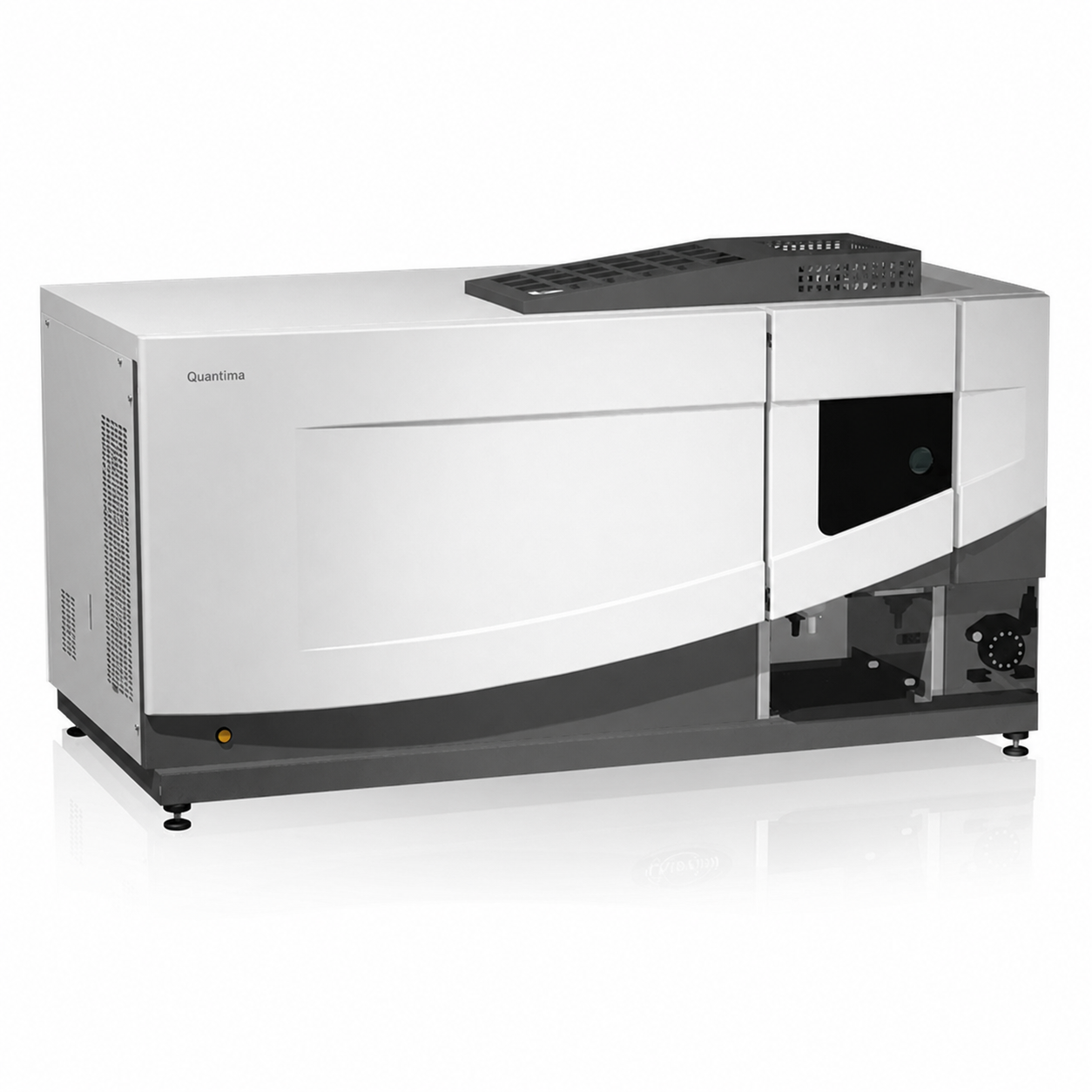
ICP-OES Elemental Analyzer for Metal Analysis
The ICP-OES elemental analyzer is designed for the simultaneous analysis of multiple elements and metals using Inductively Coupled Plasma Optical Emission Spectrometry, or ICP-OES. It is suitable for laboratories performing elemental analysis, quality control, research, and product development.
The ICP elemental analyzer can measure elements in a wide variety of sample types, including:
- Aqueous samples and solutions that use water as the main solvent
- Samples containing high levels of dissolved salts or total dissolved solids, with an optional Argon Humidifier for high-salt applications
- Lubricating oils and used engine oils for monitoring wear metals released from mechanical components
- Organic samples that are suitable for direct introduction into the ICP system
- Food samples, such as milk powder prepared by mixing it with water until a homogeneous solution is obtained before analysis
How Does an ICP-OES Analyzer Work
The ICP-OES analysis process begins by introducing a liquid sample into the Nebulizer, which converts the sample into a fine mist called an aerosol. The aerosol then passes through the Spray Chamber before entering the argon plasma inside the Torch.
Energy supplied by the RF Generator creates and maintains a high-energy plasma. This plasma provides sufficient energy to excite the atoms and ions of the elements contained in the sample.
When the excited atoms or ions return to their normal energy states, they emit light at wavelengths that are specific to each element. The Optical Spectrometer separates these wavelengths and sends them to the Detector, which measures the intensity of the emitted light.
The ICP software then compares the measured signal with the Calibration Standards to calculate the concentration of each element in the sample.
-
Specification
-
Standard
-
Model
- Covers a wavelength range of 160–800 nm with a standard 1,800 lines/mm Grating
- Provides resolution of up to 0.004 nm with an optional 2,400 lines/mm Grating
- Dual Detector system automatically selects the appropriate detector for each wavelength range
- Offers a wide analytical range of up to eight orders of magnitude
- Measures both high-concentration elements and concentrations below the parts-per-billion level without requiring sample dilution
- Features a temperature-controlled 0.75-metre Czerny-Turner optical system for improved analytical stability
- Uses a 40.68 MHz RF Generator with adjustable power from 500 to 1,500 W
- Controls the Nebulizer Gas with a Mass Flow Controller offering resolution down to 0.001 L/min
- Uses less than 11 L/min of total argon gas when analysing general aqueous samples
- Allows RF Power, Nebulizer Flow, and Viewing Height to be adjusted for individual elements
- Auto-optimisation automatically identifies suitable analytical conditions for each sample
- Includes a wavelength database containing approximately 32,000 spectral lines
- Helps users select suitable spectral lines based on the element, concentration, and Sample Matrix
- Provides more than 230 adjustable parameters for both routine analysis and research applications
- Supports the direct analysis of suitable organic samples when the system parameters are correctly configured
- Supports samples containing up to approximately 40% dissolved salts when used with the optional Argon Humidifier
- Optional PIP™ system detects plasma abnormalities and helps protect the Torch from damage
- Plasma Cam™ allows users to monitor the plasma directly through the computer screen
ISO 11885:2007
US EPA Method 200.7
ASTM D1976-20
ASTM D5185-26
ASTM D4951-14(2019)
EN 61326-1:2013
-
Specification
-
Standard
-
Model
- Covers a wavelength range of 160–800 nm with a standard 1,800 lines/mm Grating
- Provides resolution of up to 0.004 nm with an optional 2,400 lines/mm Grating
- Dual Detector system automatically selects the appropriate detector for each wavelength range
- Offers a wide analytical range of up to eight orders of magnitude
- Measures both high-concentration elements and concentrations below the parts-per-billion level without requiring sample dilution
- Features a temperature-controlled 0.75-metre Czerny-Turner optical system for improved analytical stability
- Uses a 40.68 MHz RF Generator with adjustable power from 500 to 1,500 W
- Controls the Nebulizer Gas with a Mass Flow Controller offering resolution down to 0.001 L/min
- Uses less than 11 L/min of total argon gas when analysing general aqueous samples
- Allows RF Power, Nebulizer Flow, and Viewing Height to be adjusted for individual elements
- Auto-optimisation automatically identifies suitable analytical conditions for each sample
- Includes a wavelength database containing approximately 32,000 spectral lines
- Helps users select suitable spectral lines based on the element, concentration, and Sample Matrix
- Provides more than 230 adjustable parameters for both routine analysis and research applications
- Supports the direct analysis of suitable organic samples when the system parameters are correctly configured
- Supports samples containing up to approximately 40% dissolved salts when used with the optional Argon Humidifier
- Optional PIP™ system detects plasma abnormalities and helps protect the Torch from damage
- Plasma Cam™ allows users to monitor the plasma directly through the computer screen
ISO 11885:2007
US EPA Method 200.7
ASTM D1976-20
ASTM D5185-26
ASTM D4951-14(2019)
EN 61326-1:2013


